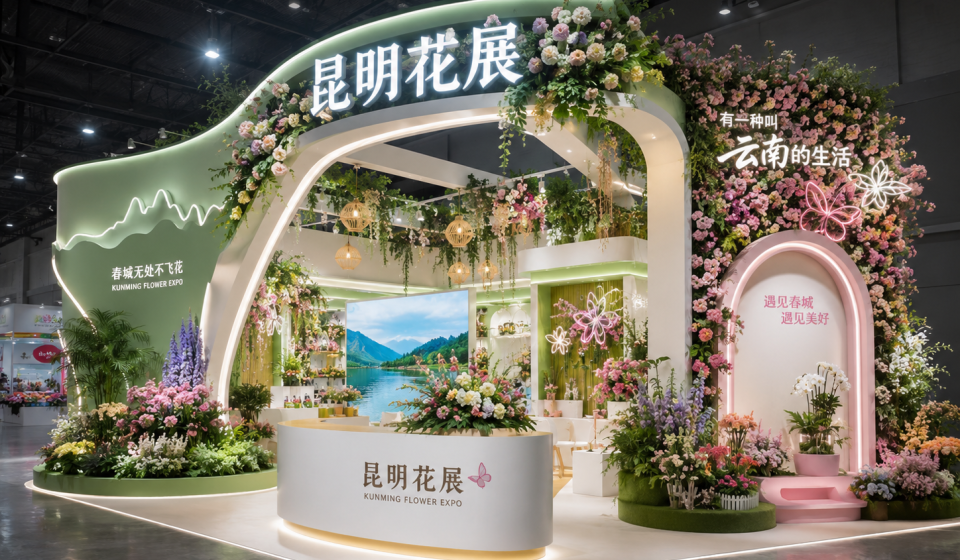

Sourcing horticulture equipment at IFEX — from smart greenhouses and drip irrigation to cold chain and post-harvest handling machinery — is a strategic move for any buyer looking to secure cost-competitive, technically robust systems directly from Asia’s largest flower production region. The Kunming International Flowers & Plants Expo brings together not only growers and breeders but also a concentrated cluster of equipment manufacturers, integrators, and agritech innovators serving the full supply chain. This guide outlines what categories you can realistically source, how to qualify suppliers on the show floor, and the practical steps for turning a trade fair conversation into a delivered, operational system.
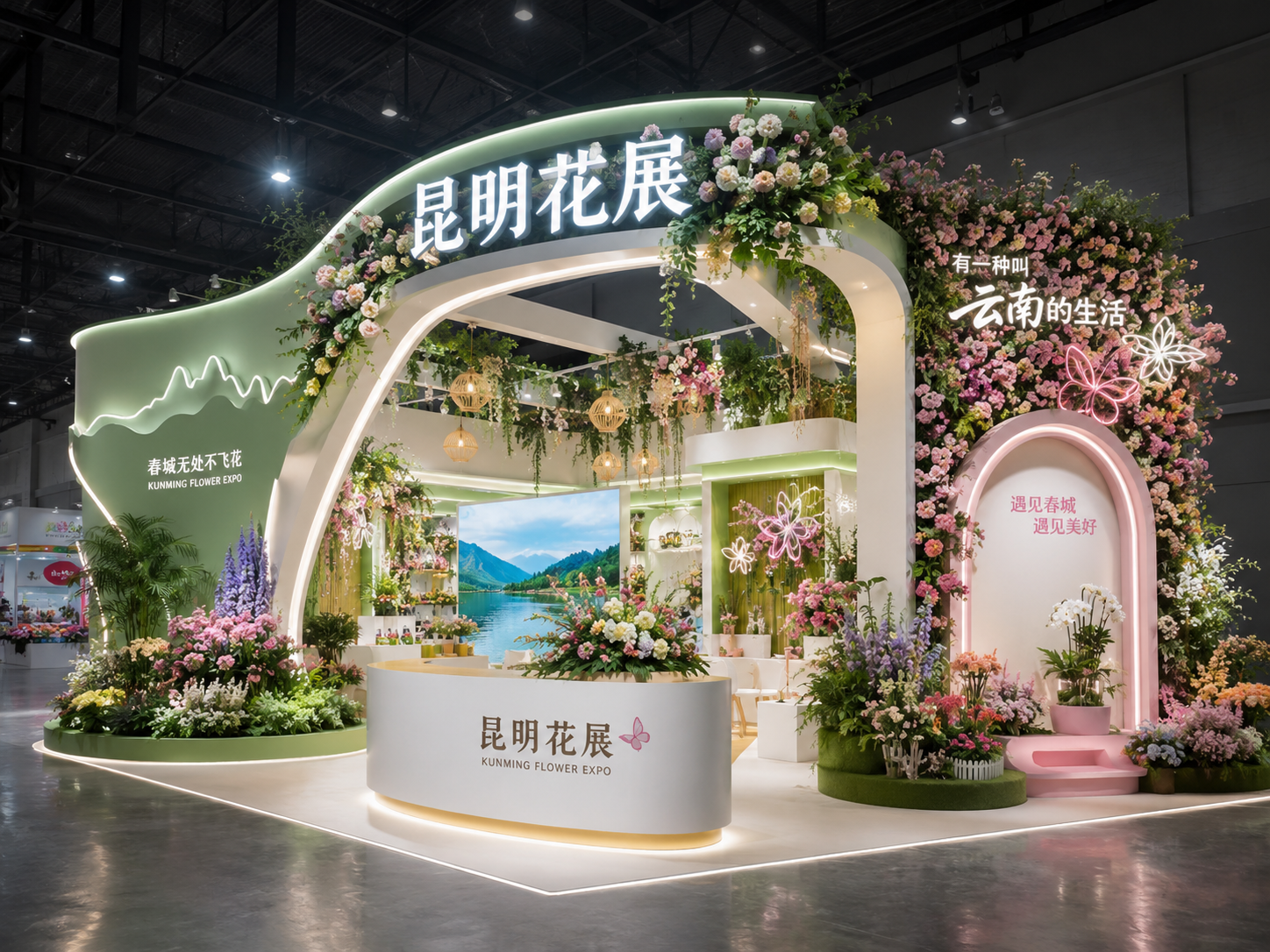
What Horticulture Equipment Can You Source at IFEX
IFEX covers the entire horticulture production chain, and the equipment categories on display have grown substantially in recent years as Yunnan’s flower sector modernises. Buyers from commercial greenhouses, propagation facilities, and large-scale post-harvest centers typically find four core areas well represented.
Greenhouses and Protected Cultivation Structures
Yunnan’s high-altitude flower farms rely on a mix of multi-span polyhouses, Venlo-style glass greenhouses, and cost-effective tunnel systems. At IFEX you encounter Chinese manufacturers offering full structural design, including galvanised steel frames, automated ventilation, shading systems, and insect netting. Several exhibitors also present modular greenhouse solutions tailored for tropical or temperate climates, often with wind-load calculations and snow-load ratings already verified for export markets. Because many of these manufacturers source their own steel and aluminium in Yunnan, component costs can be significantly lower than equivalent European-sourced structures without sacrificing structural integrity — provided you verify welding quality and coating thickness on site.
Irrigation, Fertigation and Water Management
Drip tape, micro-sprinklers, boom irrigation systems, and integrated fertigation control units are everywhere at IFEX. The suppliers range from large companies exporting to Africa and Southeast Asia to specialised Yunnan firms that have refined their designs for rose, carnation, and lily production. Buyers often focus on emitter uniformity and clogging resistance, so I recommend bringing a water-quality profile from your site if you plan to discuss these systems in detail. Several Chinese manufacturers now offer IoT-enabled irrigation controllers that can be managed remotely via cloud platforms, a feature worth comparing side by side with European or Israeli systems on your target TCO.
Cold Chain, Sorting and Post-Harvest Machinery
This is one of the most practical categories for flower buyers expanding into value-added processing. On the show floor you find cold storage panels, pre-cooling vacuum chambers, automated grading lines with vision inspection, bunching machines, and sleeving equipment. The majority of exhibitors in this segment have direct experience supplying Yunnan’s own flower packhouses, which run high daily volumes during the peak season from December to March. Because these systems are already in operation under similar throughput and labour constraints, you often get a more realistic performance guarantee than from a manufacturer without that reference base.
Automation, Sensors and Agritech
Start-ups and established agritech firms are now a fixed part of IFEX, presenting environmental sensors, cloud-based climate control platforms, robotic harvesting prototypes, and automated transport carts. While some technologies are still at pilot stage, the speed of iteration is high, and the price point is typically one-third to half of comparable European agritech for similar functionality. For buyers willing to co-develop or fine-tune a system for a specific crop, this section of the expo can deliver long-term competitive advantage.
Why Yunnan’s Equipment Market Matters for Global Buyers
Yunnan is not simply a flower production hub; it is one of the world’s largest testing grounds for horticulture equipment, with over 20,000 hectares of protected cultivation operating across diverse microclimates. This means the equipment you see at IFEX has often already been proven under conditions ranging from the low-oxygen altitudes of Shangri-La to the humid subtropics of Xishuangbanna. A manufacturer who has adapted a greenhouse ventilation system to handle Kunming’s intense UV radiation and sudden temperature drops can credibly speak to performance in other challenging environments. For procurement managers, this reduces the risk of buying a system that works on paper but fails under real farm conditions. Moreover, because the local market is intensely competitive, equipment pricing and after-sales service expectations are shaped by a demanding domestic customer base — a factor that benefits international buyers who know how to negotiate with clear specifications.
If your operation requires multi-site deployment across different climate zones, the breadth of installations visible in Yunnan gives you a reference library that few other sourcing destinations can match. However, the supplier landscape is fragmented, and not every company at the show has export experience. That makes the next step — evaluating who you meet — the critical pivot between a discovery visit and a productive sourcing trip.
How to Evaluate Equipment Suppliers at IFEX
Walking the exhibition halls without a qualification framework can waste days. Before attending, define your minimum technical requirements, your target budget envelope, and the after-sales support you need. At the booth, move past the marketing brochure quickly and ask specific, operationally revealing questions.
Verify Production Capability and Export Experience
Ask the supplier to name the countries they have shipped to and the volumes delivered. Request photographs of completed installations rather than renderings, and pay attention to the details: cable management, weld finishes, and weather-sealing quality. If the response is vague, that is your signal. You should also ask about their largest single-order value in the past 18 months and their current production lead time. These two numbers, taken together, tell you instantly whether the company is a genuine manufacturer or a trading company packaging third-party products.
Inspect Sample Hardware on the Spot
For any equipment with moving parts — motors, fans, pump assemblies — run the unit if possible. Listen for bearing noise, check for rust on fasteners, and ask to see the maintenance log of the demonstration unit. If a supplier hesitates to let you inspect a component or open a control panel, that tells you something about their confidence in their own build quality. I have seen buyers disqualify otherwise promising suppliers simply by spotting inconsistent torque on bolted connections during a booth visit, a detail that months later would become a maintenance headache.
Check Certification and Standards Compliance
Different destination markets require different certificates: CE marking for Europe, UL for North America, SASO for the Middle East. At IFEX, ask explicitly which certificates are available for the specific model you are considering, not just for the company’s general product line. Ask to see the certificate number and issuing body, and be alert to certificates issued by small, unknown testing laboratories. The cost difference between a supplier who has invested in internationally recognised testing and one who has not is often reflected in the unit price — and in the import clearance delays you might face later.
If your programme involves any customisation of electrical systems or structural dimensions, it is worth confirming the compliance pathway before finalising your bill of materials. You can reach our team at [email protected] or call +86 10 5933 9349 for a consultation on supplier readiness and compliance requirements relevant to your market.
Negotiating and Placing Orders During the Show
No one signs a turnkey greenhouse contract on the first handshake, but IFEX is the right place to establish commercial terms and take the first concrete steps toward a purchase order. Your goal should be to leave the show with a shortlist of no more than three suppliers, a written quotation that includes key technical specifications, and a clear timeline for next steps.
Pricing and MOQ
Chinese horticulture equipment manufacturers are accustomed to negotiation, and the range between the first quoted price and the final agreed price can be 10–20% depending on order size, payment terms, and customisation requests. However, price alone is a dangerous proxy for total value. When evaluating quotations, compare what is included in the base price: Does the quotation cover foundation drawings? Are installation supervision days specified? Is the control software licence perpetual or annual? Missing these line items during negotiation is the most common reason that a 20% lower capital cost turns into a higher five-year ownership cost.
Payment and Contract Terms
Standard export contracts from Yunnan equipment manufacturers often request a 30% deposit with order, 60% before shipment, and 10% after installation or upon delivery. International buyers should insist on a clear performance acceptance test procedure and define what happens if the equipment fails to meet agreed specifications. Do not accept a contract that only states “as agreed” without quantitative performance metrics. For payment methods, letters of credit remain common, but an increasing number of suppliers now accept telegraphic transfers with a phased milestone structure. Always clarify whether the price is EXW, FOB, or CIF — and ensure that responsibility for export customs clearance and documentation is spelled out, because confusion here is the number one cause of shipping delays.
Post-Show Logistics and Getting Equipment to Your Market
Once the contract is signed, the focus shifts to moving equipment across borders efficiently and staying ahead of installation timelines. Kunming as a logistics centre offers multiple options: sea freight via Shenzhen or Fangchenggang, air freight for high-value or compact systems, and increasingly rail freight along the China-Europe Railway Express for Central Asian and European destinations. For temperature-sensitive or precision equipment, consider whether the supplier can provide factory crating designed for multi-modal transport, and verify that the packaging meets ISPM 15 standards for wood treatment to avoid customs rejection at destination.
Phytosanitary and safety certificates required for ancillary equipment — such as growing media handling machines or water treatment systems — can differ from those needed for the plants themselves. Confirm with the supplier that all documentation will be ready three working days before container loading and that they have experience with your specific country’s import clearance requirements. Many first-time buyers underestimate the administrative lead time needed after production is complete, so scheduling a buffer week between the “ready to ship” date and the actual vessel cutoff is a practical safeguard.
Common Questions About Sourcing Equipment at IFEX
What is the typical lead time for horticulture equipment from Yunnan?
Lead times vary by product complexity, but for standard greenhouse structures and irrigation systems, expect 45 to 60 working days from order confirmation to container availability. Automated grading lines or customised cold chain systems can take 90 to 120 working days depending on component sourcing. The most reliable way to compress timelines is to finalise technical drawings before the show ends and to avoid last-minute specification changes, which are the single biggest cause of schedule slippage in export equipment manufacturing from this region.
Can I visit supplier factories during or after IFEX?
Yes. Many equipment manufacturers have production facilities within a three-hour drive of Kunming, and factory visits are a standard part of the IFEX sourcing process for serious buyers. A factory visit lets you verify welding quality, check inventory levels of raw materials, assess the production management system, and meet the engineering team who will handle your project. I recommend scheduling one half-day visit per shortlisted supplier, with a clear checklist of what you want to inspect, rather than trying to visit five factories in two days. The hosts will often arrange transport; confirm vehicle details and pick-up time the evening before.
How do I ensure the equipment meets international safety and phytosanitary standards?
Demand documented evidence of relevant certifications for the exact model you are purchasing, not just the company’s ISO 9001 certificate. For import clearance, work with your local customs broker early to confirm the required documentation chain — especially for equipment that incorporates wood components or uses hydraulic oil. The supplier’s export history to your region is a strong practical indicator, because they will already understand what your border inspectors look for. If your market has recently updated its plant health or electrical safety regulations, consider a pre-shipment inspection by a third-party service to avoid surprises.
How does the cost of after-sales support compare to European equipment suppliers?
Chinese manufacturers increasingly offer remote after-sales support via video call and, for larger installations, can dispatch an engineer to your site within one to two weeks. Service travel costs are generally lower than what European suppliers charge, but the key difference is in the completeness of the technical documentation. European suppliers typically provide more detailed maintenance manuals and spare parts lists in English, while Chinese suppliers vary. Before signing, request a sample of the English-language documentation for a similar previous installation, and confirm whether spare parts can be shipped by courier within 48 hours. If your operation has a high-wear component that needs regular replacement, set up a spare parts stocking agreement in the original contract to prevent production interruptions. For help structuring your equipment sourcing plan and connecting with vetted suppliers at IFEX, please share your requirements with us at [email protected] or call +86 10 5933 9349.