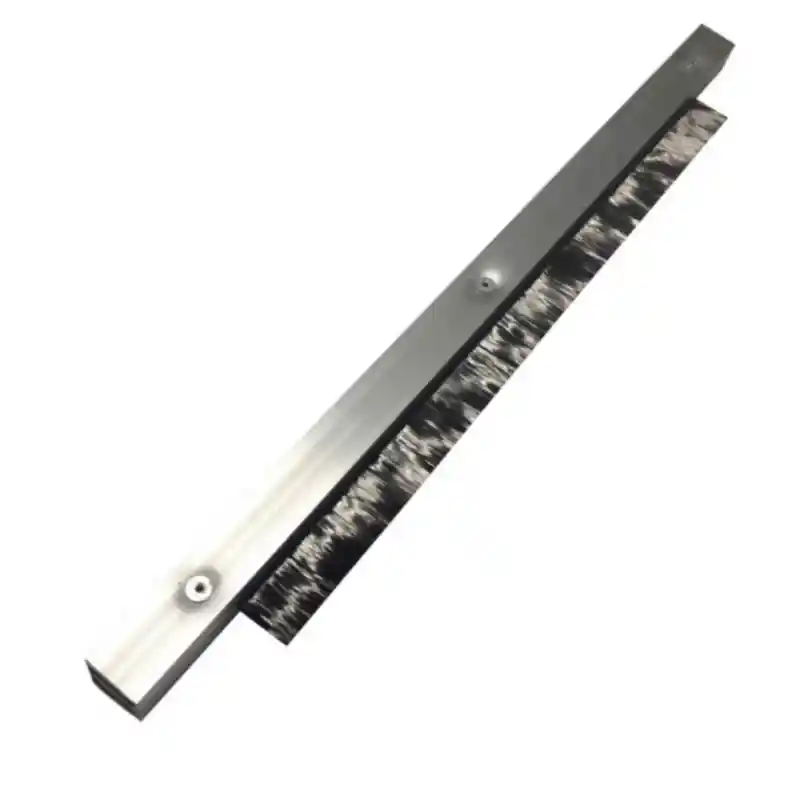

A formed strip brush delivers a targeted seal or cleaning action inside a machine gap when the brush profile is engineered to match the actual mounting slot, operating clearance, and movement pattern of the equipment. Off-the-shelf straight strip brushes usually fail within weeks in these special-fit conditions because they were never dimensioned for the specific channel width, compression ratio, or angular approach that the application demands. Drawing directly on 15 years of custom brush manufacturing work, this article covers the profile specification inputs, filament trade-offs, and mounting integration details that separate a brush that holds its geometry from one that leaks, frays, or jams. If you are responsible for sealing a dust enclosure, blocking process fluid creep, or wiping a moving part without damaging the surface, the decisions start long before you pick a filament grade.
What a Formed Strip Brush Contributes to Industrial Sealing and Cleaning
A formed strip brush is a manufactured brush strip whose metal channel, or back, has been permanently bent, corrugated, or pressed into a non-straight profile so it can follow a curved housing, wrap around a shaft, or sit at an angle inside a narrow slot. Unlike flexible strip brushes that rely on a pliable back to bend during installation, a formed brush arrives already shaped to the customer’s geometry. That pre-forming is what gives the brush predictable contact force along the entire length, no uncontrolled kinks at corners, and uniform bristle engagement with the target surface.
The brush’s primary job splits into two families. In sealing, the bristles fill a gap to block dust, chips, splash, or thermal drafts while letting a shaft, door, or slide pass through. In cleaning, the same bristles act as a soft scraper or wiper that removes debris, coating residue, or fluid from a moving part without scoring it. Many applications need both functions at the same time, a formed strip brush sealing the compartment against outside contamination while cleaning the conveyor belt or piston rod on its way out. Getting both actions to work simultaneously requires the profile, filament density, and overall height to be specified as a system, not as separate features.
Profile Geometry Sets the Seal’s Contact Pressure and Service Life
The metal channel shape, whether a simple U-channel with a continuous back or a more complex F-channel with an integrated leg, determines how the bristles are supported and how the brush mounts. In a formed brush, every bend location, radius, and leg angle is custom-set to the machine drawing. This eliminates the trial-and-error step where a flexible strip is forced into a track and hoped to stay put.
Three profile dimensions matter most for a seal that lasts. First, overall brush height above the channel must match the gap depth plus a controlled compression allowance. Too tall and the bristles overwhelm the drive motor or buckle sideways. Too short and they barely touch the target surface, leaving a gap that dust and fluid find immediately. Second, the channel width or cross-section must engage the mounting slot with enough interference that the brush never walks out under vibration, yet still slide in by hand during assembly. Third, the bend radius at corners cannot be tighter than the filament material’s minimum sustainable curvature. Nylon filaments can survive a tighter form radius than abrasive-impregnated nylon because the solid monofilament resists kinking, while abrasive grain-loaded bristles snap if over-bent.
Filament Selection Balances Sealing Density Against Abrasion Loss
Choosing the right filament for a formed strip brush is usually the step where procurement gets stuck. The filament has to do two things that work against each other: pack densely enough to create a seal but remain flexible enough to wipe without wearing itself or the workpiece in the first hundred hours.
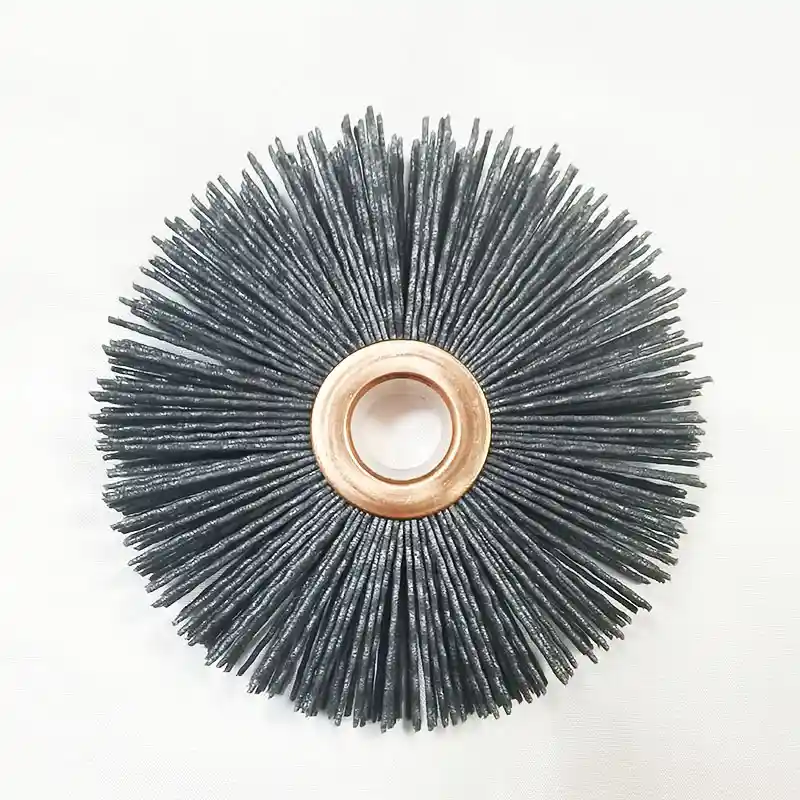
For clean-room or food-grade dust sealing where abrasion is not the primary concern, solid nylon 6 or 6.6 filaments with a smooth, round cross-section fill the channel efficiently and offer good recovery memory. Polypropylene filaments provide better chemical resistance at a lower cost but lose stiffness faster in warm environments. When the brush must seal and clean in a single pass, a medium-density filament arrangement with a trimmed tip end works better than a flagged (split-end) filament because the solid tip pushes debris off the surface while the surrounding bristles block airborne particles.
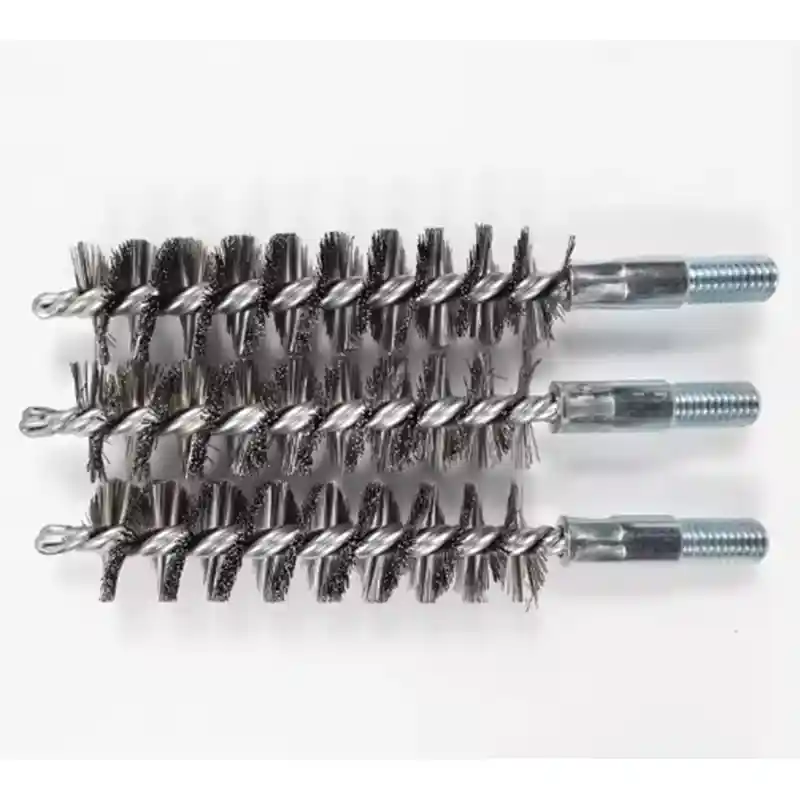
In sealing applications that also involve intermittent contact with cutting fluids, coolants, or light oil, I lean toward nylon with added UV-stabilized colorant, not for the color but because the additive package slows the hydrolysis that attacks standard nylon in wet heat cycles. For heavy-scale removal or descaling combined with sealing, crimped steel wire formed in a channel provides the abrasive action but demands a channel material with a higher yield strength, like galvanized or stainless steel, to resist gradual spreading.
Mounting Channel Design Determines How the Brush Stays Put
A formed strip brush is only as reliable as the interface between its metal channel and the machine’s receiving slot. The most common field complaint I hear is not about bristle wear but about brushes walking out of their tracks after a few hundred cycles. This almost always traces back to a channel spec that was too loose for the customer’s slot tolerance or a channel with no retention feature.
A simple U‑channel with parallel legs grips well in a straight, tightly machined slot but can lose its bite if the slot has a draft angle or if the machine structure flexes. Adding a small outward crimp or spring ear on one leg converts a friction fit into a positive-lock connection that resists axial push. On formed channels with bends, the lock feature must be continuous through the curve or the brush will lift at the apex of the turn. For pressed-in brushes that cannot have side ears, a base leg with a slight return bend creates a hook that engages the back of the mounting groove. The trade-off is that a hook-style channel is harder to remove without damaging the channel, so it is best for semi-permanent installations.
Specifying a Custom Formed Brush Without Leaving Out the Critical Details
Supplying a manufacturer with a clean drawing and a few operating parameters turns a six-week back-and-forth cycle into a two-week order. Over the years, I have seen the same handful of missing details delay tooling or force a rework after the first samples arrive.
The minimum information package we ask for includes the machine slot cross-section with tolerance range, the full 2D or 3D profile path the brush must follow, the target surface material and its hardness, the relative speed and stroke rate, the expected temperature range, and what contaminants or fluids the brush will encounter. One often-overlooked point is the orientation of the slot relative to gravity and motion direction. A slot that faces down and vibrates needs a very different retention force than a slot facing up in a stationary housing.
When the brush is part of a sealing system that also includes a labyrinth, a rubber lip, or a felt wad, the brush height and compression should be set to work with those adjacent elements, not against them. In a recent custom build for a CNC lathe way-cover seal, the brush was specified 2 mm taller than the original felt strip, with a reduced filament density at the inner diameter corner to prevent the bristles from folding over each other during the rapid table reversal. That small adjustment eliminated the bristle jamming that had been the customer’s main headache for years.
Common Specification Mistakes That Undercut a Good Design
The most expensive mistake is under-specifying the brush height because the engineer measures the gap at rest. Under dynamic load, the machine structure deflects, the target part shifts slightly, and that 2 mm “extra” compression disappears. The brush loses contact, and the seal fails. Always provide the minimum and maximum operating gap, not just the static measurement.
Another repeated error is selecting a channel material that galls or corrodes in the machine slot. Aluminum channels in a steel slot with moisture present will eventually seize, making field replacement a cutting job. Stainless steel channels solve the galvanic problem but add cost, so the right choice depends on the lifetime cleaning cycles the brush will see.
Finally, choosing the bristle trim length based only on what sits on a shelf rather than on what the application needs usually shortens the brush’s useful life by at least half. A brush that is trimmed too short for the channel depth exposes less filament above the metal lip, stiffening it and concentrating wear at the tips. A deeper channel that holds more filament supports the bristles farther up their length, distributing the bending stress and preserving the seal longer.
Working With an Experienced Manufacturer Saves the Iteration Count
A good brush supplier should be able to read your slot drawing, ask you three un-asked questions, and return a profile proposal that you can test with confidence. At Huixi Brush, we spend the front-loading time verifying whether the intended filament and channel combination can physically hold the curve you drew, because a 3D model has no stiffness limitation until the first sample breaks. If your sealing or cleaning application involves a non-straight path with tight corners, abrasive media, or elevated temperature, the right first step is to email your drawing and operating parameters to [email protected] for a manufacturability check. Our engineering team in Shanghai works from your dimensions, not from a catalog guess, and we routinely ship small-batch custom formed brushes for test programs before the production ramp. Call +86 1580 0932 713 or send your file to start the review.
Questions Buyers Ask Before Committing to a Custom Formed Brush
How do I know if I need a formed strip brush instead of a flexible strip brush?
You need a formed brush when the installation path is not straight and the brush must maintain consistent bristle contact through a curve or an angle without manual adjustment. A flexible strip can follow a gentle arc, but unless the channel is properly clamped at very short intervals, it will lift at the mid-point of a tight bend. A pre-formed brush eliminates that risk because the channel itself holds the shape permanently.
Flexible strip brushes work well in long straight runs, and <flexible strip brush> explains when a bendable back can handle moderate curves without a formed channel.
What is the smallest bend radius a formed brush can hold without damage?
That depends entirely on the filament material and the channel thickness. Solid nylon filaments in a thin galvanized steel channel can typically hold a radius down to about 12–15 mm without visible kinking. Abrasive nylon or crimped wire bristles need a radius of at least 25–30 mm to avoid snapping or permanent splay. We confirm the safe minimum radius during tooling review before cutting the forming die, not after the fact.
Can I get a formed strip brush in a short prototype run to test before placing a volume order?
Yes, and that is standard practice. For a new profile, we usually produce a 0.5‑meter or 1‑meter test length first so that your engineering team can verify fit, compression, and retention in the actual machine slot. Prototype tooling charges are lower than full production tooling, and any adjustments we make at the prototype stage prevent wasted batches later. Send your slot drawing with the desired profile path and we will quote both the prototype and the production unit cost.
What information does the manufacturer absolutely need to avoid a bad first sample?
At minimum: the slot cross-section with tolerance, the full 2D or 3D path the brush must follow, the target surface material, the expected stroke speed and frequency, the working temperature, and the type of contact or fluid present in the environment. Leaving out any of these usually means the first sample either does not fit, loses tension in operation, or degrades faster than predicted. Share your file at [email protected] and we will confirm whether the application information is complete before we start tool design.
If you’re interested, check out these related articles:
honing brush treat burrs in barrel parts without affecting accuracy and scale
brushes for steel wire industries cleaning descaling derusting polishing