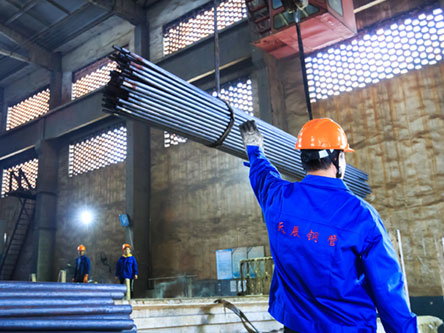

Steel pipe galvanizing is the most widely used method for corrosion protection in structural and mechanical applications, but its effect on precision dimensions is often underestimated. In over a decade of manufacturing cold‑drawn steel tubes, I have seen how a poorly controlled galvanizing process can ruin a batch of otherwise high‑precision parts. The zinc coating adds thickness, alters surface profile, and introduces metallurgical changes that can cause hydrogen embrittlement if not managed. Understanding these impacts is not optional for engineers specifying galvanized precision tubing; it is the difference between a reliable component and a field failure.
The Hot-Dip Galvanizing Process for Steel Pipe
At its heart, hot-dip galvanizing is metallurgical bonding. A steel pipe is immersed in a bath of molten zinc at roughly 450°C, and the iron at the surface reacts with the zinc to form a series of iron‑zinc alloy layers, topped by a pure zinc outer layer. But before the pipe ever touches zinc, it goes through a thorough surface preparation that is the real foundation of coating quality.
The pipe is first degreased to remove oil, then pickled in an acid bath to strip mill scale and rust. After rinsing, it is fluxed—typically in a zinc ammonium chloride solution—to prevent oxidation before dipping. These pre‑treatment steps are unforgiving; if the steel surface is not completely clean, the zinc will not bond, and bare spots or blistering will appear later. The pipe then enters the zinc bath, where it stays until the steel reaches bath temperature and the alloy layers develop fully. Withdrawal speed and cooling rate then determine the final coating thickness and appearance. For small‑diameter precision tubes, the entire sequence often runs continuously, but batch galvanizing in baskets is also common for shorter lengths.
How Galvanizing Affects Dimensional Accuracy and Mechanical Properties
This is where the story gets interesting for anyone working with precision tolerances. A typical hot‑dip galvanized coating adds 50 to 150 µm per side, depending on steel chemistry, immersion time, and withdrawal speed. For a cold‑drawn tube with a diameter tolerance of ±0.1 mm, a coating that adds 0.1 mm per side instantly pushes the finished part to the outer edge of the tolerance band, if not beyond it. I recall a batch of seamless tubes intended for hydraulic cylinder bodies that arrived from the galvanizer 0.2 mm oversized; the seals would not seat, and the entire order had to be reworked by a final sizing pass, adding cost and lead time.
Beyond dimensions, the process changes mechanical behavior. The iron‑zinc alloy layers are harder than the base steel, but they are also brittle. Under bending or impact, thick coatings can crack, creating a path for corrosion. In hydrogen‑sensitive steels, the pickling step can introduce hydrogen embrittlement; a phenomenon we watch carefully on high‑strength grades like 4140. If embrittlement is a concern, a post‑galvanizing bake‑out at 200°C for several hours is the standard countermeasure.
Key Standards and Coating Thickness Requirements
International standards bring order to coating thickness, and the choice of standard is not trivial because it determines the minimum zinc weight and the acceptance criteria for inspection. The table below summarizes the main standards relevant to galvanized steel pipes:
| Standard | Scope | Typical Coating Weight (g/m²) |
|---|---|---|
| ASTM A123 | Structural steel, including pipe | 550–610 (average) |
| EN ISO 1461 | General iron and steel | 505–610 depending on steel thickness |
| ASTM A153 | Small hardware and threaded parts | 395–430 per class |
| BS EN 10240 | Internal and external coatings on steel tubes | Aligned with EN ISO 1461 |
For a cold‑drawn tube with a wall thickness of 3 mm, the EN ISO 1461 minimum coating mass is typically 505 g/m², which corresponds to roughly 70 µm of zinc. That number must be understood as the minimum, not the average, so local thickness can be higher. When specifying, we always recommend that engineers state both the coating class and the post‑galvanizing dimensional limits, because a standard coating can still push a precision tube out of spec if the base diameter is at the high end of its tolerance.
Quality Verification: Inspection and Defect Detection
A galvanized pipe passes through several inspection gates before it leaves the plant. Visual inspection catches obvious defects: uncoated areas, lumps, runs, and roughness. A magnetic thickness gauge then measures the coating; it reads the zinc thickness directly and is fast enough to check every tube on a production line. For critical applications, we also run an adhesion test by striking the coating with a chisel or using a tape test.
Bare spots, often called black spots, are the most common rejection cause, typically from inadequate pickling or fluxing. Lumpy coatings usually mean the withdrawal speed was too low or the zinc temperature too low, while excessive roughness can come from a high withdrawal speed or a zinc‑aluminum addition reacting with the flux. A good galvanizing line has a quality log that ties each bath parameter to the resulting appearance, and experienced operators can predict what a tube will look like before it comes out of the bath.
Specifying Galvanized Precision Tubes for Your Application
Not every precision tube should be galvanized. For hydraulic lines where internal cleanliness and tight ID tolerances are paramount, an electroless nickel plate or a nitriding treatment may serve better, because galvanizing inside a small bore is difficult to control and the dimensional change may close the bore. Conversely, for structural guards, brackets, and heavy‑wall bushings that will live outdoors, hot‑dip galvanizing is hard to beat for cost and service life.
If your program involves tight dimensional tolerances, confirm the post‑galvanizing dimensional data with the manufacturer before finalizing your bill of materials. At Tenjan Steel Tube, we regularly provide sample data showing the dimensional shift for a given tube size and coating class, so that our customers can design their components with the final coated dimensions in mind. A few extra microns on the drawing can save a whole rework cycle later.
When you are ready to order, send your part number, dimensions, and coating requirement to [email protected] or call +86 13401309791. Our engineering team will review the feasibility and provide a compliance check before production begins.
Common Questions About Galvanized Steel Pipe
Does galvanizing weaken steel pipe?
No, properly executed hot‑dip galvanizing does not reduce the tensile strength of the base steel. The zinc bath temperature of 450°C is below the normalizing range of most carbon and low‑alloy steels, so the mechanical properties remain essentially unchanged. The exception is high‑strength quenched and tempered steels, where exposure to 450°C can soften the material. For those grades, we always discuss alternative coating methods.
Can galvanized pipe be welded without damaging the coating?
Welding over zinc is messy; the zinc vaporizes and can cause porosity. The common practice is to remove the galvanized coating from the weld zone by grinding before welding, then re‑apply a zinc‑rich paint or metallizing after the weld cools. The pipe retains its corrosion resistance everywhere except the restored area, and the repair coating should meet the same thickness as the original when possible.
How long does galvanized coating last underground?
In neutral soil conditions, a 70 µm galvanized coating can protect steel for 30 to 50 years. Acidic soils or high‑saline environments, however, accelerate dissolution. In those cases, a thicker coating class or an additional organic overcoating is advisable. I always recommend that our customers share the soil report so we can recommend the right coating system.
Is galvanized pipe suitable for hydraulic systems?
Generally not for the internal surfaces. The roughness of a hot‑dip coating can damage seals, and the dimensional change inside the pipe bore makes it hard to maintain tight clearances. External galvanizing of hydraulic cylinder tubes is sometimes acceptable for corrosion protection on the outside, but even then, the dimensional shift on the OD must be accounted for in the gland design. Share your requirements and we will confirm whether galvanizing is the right choice for your system.