

When sourcing fresh cut flowers from Yunnan’s growing regions, the pricing term you agree with a supplier determines not only your cost but at which point you assume responsibility for the product’s condition. Flower export terms, specifically FOB, EXW, and CIF, assign risk and logistics costs differently, and choosing the wrong one can erode margins or compromise product quality before it reaches your market. I have spent over fifteen years helping international buyers navigate sourcing in Kunming, and I have seen how a clear understanding of these Incoterms creates stronger supplier relationships and protects perishable shipments.
Why Flower Export Terms Are Different
Standard trade terms cover general cargo, but fresh flowers introduce variables, cold chain continuity, phytosanitary documentation, and a shelf life measured in days, that redefine acceptable risk. A rose that sits in a non-refrigerated warehouse for four hours under EXW may already have lost two days of vase life by the time it clears customs in the destination country. In my experience, buyers who treat flower shipments like general cargo often face spoilage claims because they did not account for temperature breaks during handover. The term you choose governs exactly when cold chain responsibility passes from the grower to you, making it a decision with direct quality consequences.
EXW Removes Supplier Responsibility
Under EXW, the supplier makes the goods available at their premises or a named location. From that moment, the buyer handles export packing, inland transport, customs clearance, and all freight arrangements. For non-perishable goods this can work, but for fresh flowers it means the buyer must have a fully operational cold chain team on the ground in Kunming, capable of receiving cut stems, inspecting them for damage, and loading them into a temperature-controlled truck within hours. I have seen a dried-flower buyer use EXW successfully because his products are stable at ambient temperature, but for fresh roses or lisianthus, the window is too narrow. For first-time buyers without local logistics partners, EXW is rarely advisable.
FOB Balances Control and Cost at the Port
FOB divides responsibility at the named point of export. In the Kunming flower trade, that typically means FOB Kunming Changshui Airport, where the grower delivers the boxed product to the cargo terminal and completes export customs formalities. Risk transfers to you at that handover. This arrangement gives you control over the international freight forwarder and lets you choose insurance coverage while the supplier handles the upstream logistics they know best. I generally advise first-time buyers to negotiate FOB terms, it allows you to select a forwarder with proven cold chain handling and monitor temperature data from the moment the cargo enters the terminal. Most established Yunnan growers accept FOB and understand the documentation sequence.
CIF Offers Convenience with Built-In Coverage
CIF extends the supplier’s obligation to cover cost, insurance, and freight to the destination port or airport. You take delivery at your country’s entry point and handle onward transport and import clearance. The convenience is real: a single invoice, fewer freight decisions, and less coordination. However, you surrender visibility of the carrier, and the insurance the supplier arranges may carry a minimal coverage scope that undervalues perishable product. I have observed that CIF works best when you source from a grower with long-standing logistics partnerships who can negotiate freight rates lower than you could secure independently. For buyers importing small, frequent shipments, CIF can simplify procurement considerably.
If you are unsure which term fits your product mix and risk tolerance, reaching out early can prevent a shipment from being handed over without cold chain continuity. Contact our team at [email protected] or call +86 10 5933 9349 to clarify your options before your next order.
Matching Incoterms to Your Sourcing Strategy at IFEX
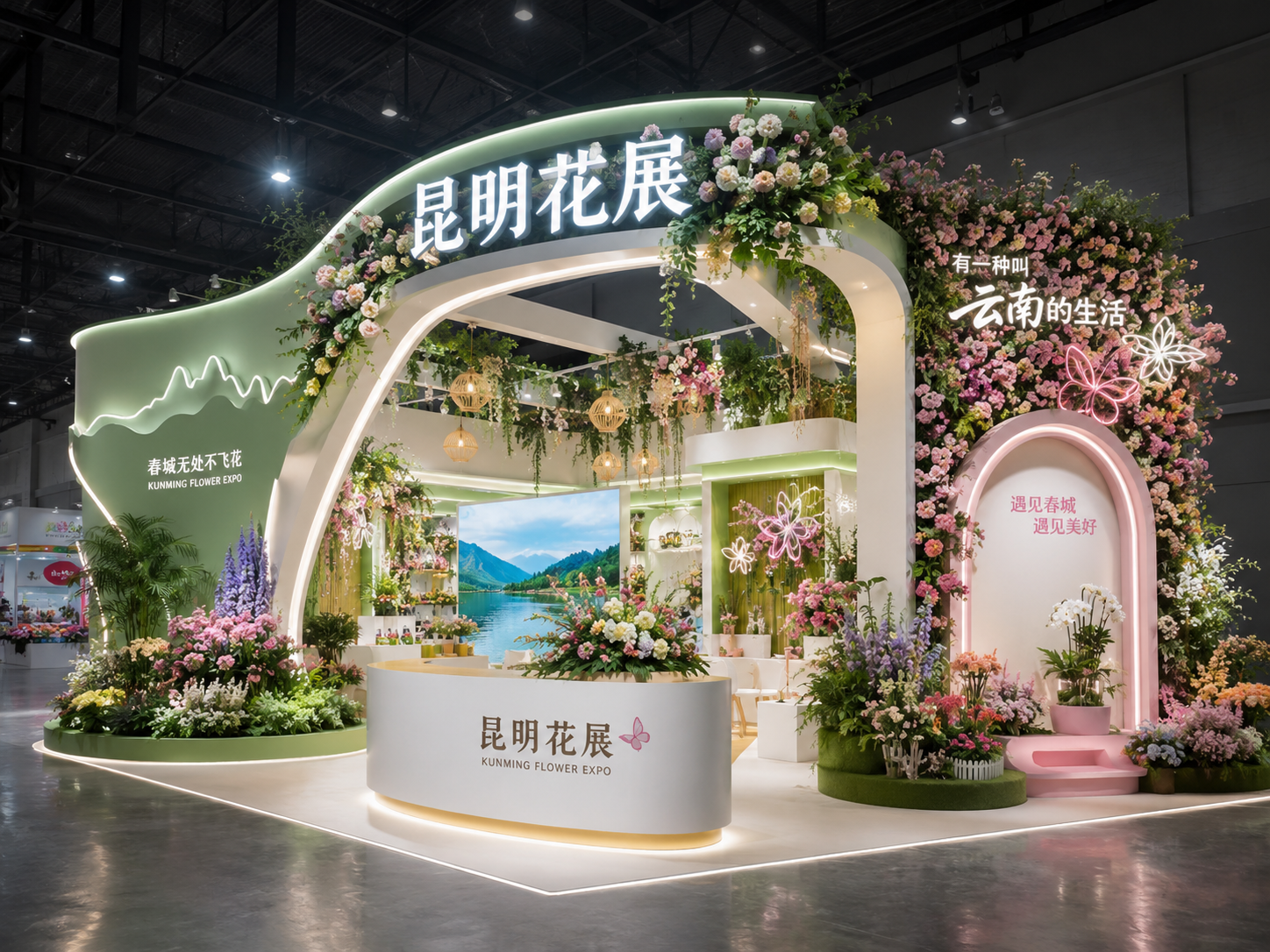
At the IFEX Kunming International Flowers and Plants Expo, you sit across a table from growers and can negotiate terms as part of a face-to-face relationship, not an email thread. I have seen buyers use their IFEX visit to lock in FOB terms with multiple growers after inspecting cold storage and packhouse facilities firsthand, a level of diligence that is nearly impossible through remote communication. The exhibition environment lets you compare how different suppliers price EXW, FOB, and CIF, and you gain a clear sense of which farms have the logistical maturity to support your preferred term. Use the conversations to test assumptions: ask a grower how many hours elapse between harvest and airport terminal under FOB, and you will quickly separate theory from real capability.
Logistics Checkpoints That Shape Your Incoterm Choice
Several technical checkpoints influence which term makes sense for a flower shipment. These factors are often overlooked until a claim exposes a gap in responsibility.
| Risk Factor | EXW | FOB | CIF |
|---|---|---|---|
| Cold chain control from farm to airport | Buyer responsibility from farm gate | Supplier until cargo terminal handover | Supplier until destination airport |
| Phytosanitary certificate management | Buyer arranges at own risk | Supplier handles export compliance | Supplier handles export compliance |
| Insurance coverage for perishable loss | Buyer’s policy | Buyer arranges post-handover | Supplier’s policy, often limited scope |
| Customs clearance complexity | Buyer handles both export and import | Supplier exports, buyer imports | Supplier exports, buyer imports |
| Realistic for fresh cut flowers | Only with local team on site | Broadly suitable | Suitable with trusted growers |
Phytosanitary certificates, cold chain monitoring point records, and insurance terms become part of the Incoterm conversation because each term shifts who bears the cost if a certificate is delayed or a reefer unit fails. Under FOB, the supplier must deliver the flowers with export documents in order, but under EXW that burden is yours from the start.
Common Questions About Flower Export Terms
What makes CIF risky for high-value flower shipments?
The risk sits in the insurance policy the supplier buys on your behalf. Most standard CIF policies cover physical loss or damage during transit but may not cover temperature-related quality degradation unless explicitly extended. If a reefer container fails and the supplier’s policy excludes gradual spoilage, you receive the freight, not the value of the goods. Before accepting CIF, ask for a copy of the insurance terms and compare the per-kilogram coverage to your landed product value. If the gap is wide, FOB and your own policy offer more control.
Why do so many growers default to FOB for export?
From the grower’s perspective, FOB limits their financial exposure to the Kunming terminal gate. Once the cargo passes export clearance, any delays, rerouting, or customs holds at the destination become the buyer’s cost. For a Yunnan rose producer running on narrow margins, that boundary is logical. For you as a buyer, FOB matches that boundary with your ability to select a competent forwarder, which is why it has become the most common baseline term for fresh flower exports in this region.
Can I change terms after a few successful shipments?
Yes, and the sequence matters. I have seen importers start with FOB for the first three or four shipments to validate quality consistency and logistics reliability, then shift to CIF once the grower has proven their cold chain and documentation discipline. The shift is easier when the relationship is built on the transparency that comes from meeting at IFEX and jointly reviewing shipment performance. Establish a clear escalation protocol for temperature excursions and paperwork errors before you adjust terms.
How does IFEX help me compare pricing terms across suppliers?
At IFEX, you can request a cost breakdown from multiple growers on the same product spec and compare not just unit price but the logistics line items under each Incoterm. Because you are speaking directly, you can ask how many hours the cold chain covers before the airport, which freight forwarder they partner with, and whether their CIF insurance covers perishable loss. That level of detail rarely surfaces in email. I recommend preparing a short questionnaire that lists your target Incoterms and having growers walk you through their process step by step right at the booth.
What term do you recommend for a buyer importing mixed flower varieties?
The answer depends on whether the varieties share the same cold chain tolerance. A mixed shipment of roses, lilies, and eucalyptus may need split temperature zones, which complicates logistics. In such cases, FOB with a forwarder experienced in multi-temperature handling often works better than CIF because you can specify the transport protocol directly. If your shipment volume is small, CIF may still make logistical sense, but confirm that the carrier can maintain humidity and temperature thresholds for the most sensitive stems. If you are building a multi-variety sourcing plan, share your product list with us at [email protected] or call +86 10 5933 9349, and we can connect you with growers and logistics partners who match your requirements.
Plan Your Flower Export Logistics with Confidence
A flower shipment that arrives spoiled despite a fair price was not a good deal. The term you choose shapes who assumes the risk between harvest and delivery, and getting it right is as critical as selecting the right variety. We help buyers translate Incoterm logic into practical Kunming-to-market logistics, drawing on direct knowledge of Yunnan’s flower supply chain. Share your product portfolio and target market with us at [email protected] or call +86 10 5933 9349, and we will help you map out the most cost-effective Incoterm approach for your Kunming sourcing, before you sign your next contract.