Most business owners I speak with understand that scent influences mood, but they rarely picture the technology that makes consistent fragrance delivery possible across a 10,000‑square‑foot space. Ambient scenting is not simply placing a diffuser in a corner and hoping the smell travels. It is a system of engineering, fluid dynamics, and fragrance chemistry that distributes a consistent olfactory experience throughout a defined environment. The distinction matters because the difference between a visitor noticing the scent and a visitor being overwhelmed by it often comes down to how the hardware is matched to the airflow and volume of the room. When you think about ambient scenting as a technical installation rather than a decor addition, the implementation decisions become clearer and the results far more predictable.
What Exactly Is Ambient Scenting?
Ambient scenting is the controlled dispersion of fragrance into a commercial environment to create a subtle, uniform background aroma. Unlike home diffusers that fill a single room with a strong burst, commercial ambient scenting is engineered to maintain a constant, barely perceptible scent level that visitors register without consciously noticing. The objective is background perception, not foreground distraction.
The hardware operates by atomizing fragrance oil into microscopic particles and dispersing them through either the existing HVAC ducts or a standalone fan unit. Particle size is critical: droplets need to be small enough to remain suspended in the air, typically under 10 microns in diameter, so that the scent distributes evenly rather than settling on surfaces. In larger installations, the system pulses the fragrance on a programmed schedule, adjusting output according to occupancy sensors or time of day so that scent intensity never spikes and never fades entirely. This precision separates commercial ambient scenting from the plug‑in diffusers used in homes.
How Do Ambient Scenting Systems Deliver Fragrance?
The delivery mechanism determines everything about how a scent program performs. I have seen spa lobbies where a well‑chosen fragrance fell flat because the diffuser type was wrong for the air turnover in that space. Selecting the hardware first, before selecting the scent, is the sequence that leads to dependable outcomes.
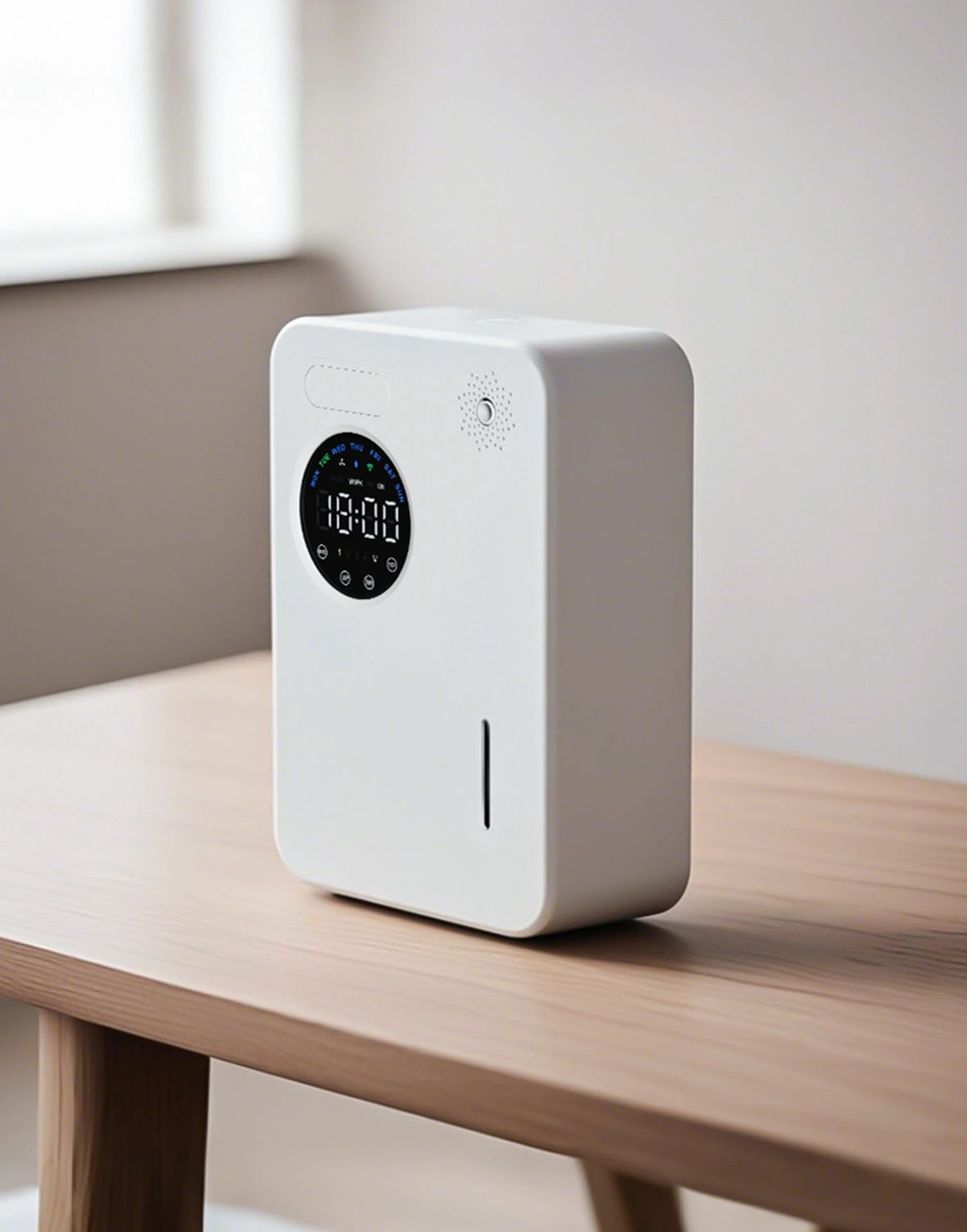 Four primary diffusion technologies are in use today, each suited to a different set of spatial conditions:
| Diffusion Method | How It Works | Best For |
|---|---|---|
| Cold‑air nebulising | Utilises high‑pressure air to break fragrance oil into a dry mist; no heat or water involved | Large open areas, HVAC integrations, spaces where moisture is a concern |
| Ultrasonic vibration | Rapid diaphragm vibration turns oil‑and‑water mixture into a cool mist | Smaller or medium rooms, spa and office environments where visible mist is acceptable |
| Fan‑driven atomisation | A small pump and fan push oil droplets through a nozzle; droplets are larger than nebulised mist | Standalone units covering up to 1,000 sq ft, typically with cartridge‑based oil bottles |
| HVAC in‑line injection | An atomising head mounted directly into the air duct; scent travels with conditioned air | Whole‑building coverage, multi‑floor hotels, retail chains with central air handling |
The coverage and control gaps between these options can be surprisingly large. A Bluetooth‑enabled HVAC scent diffuser like Scent‑Share’s model 19 covers up to 30,000 square feet from a single unit and lets facility managers adjust intensity and scheduling from a phone. In contrast, a small standalone desktop diffuser might manage 300 square feet and relies on manual touch controls. The overlap does not exist when square footage exceeds a threshold, and choosing the wrong method usually means inconsistent coverage at the edges of the space and more frequent refills.
What Are the Proven Business Benefits of Ambient Scenting?
The measurable business case for ambient scenting rests on three effects that hold up across industries: increased dwell time, higher perceived brand quality, and stronger memory encoding. I have worked with retail groups that saw customers linger 15 to 20 percent longer after a consistent scent was introduced, without any other operational changes. The mechanism is well‑studied: the olfactory bulb connects directly to the limbic system, so fragrance triggers emotional assessment before the conscious mind labels it.
Hotels deploy ambient scenting partly for the immediate luxury signal it sends to the lobby, but the strategic gain is actually a longer‑term memory association. When a guest returns months later and the same scent registers, the recall of their previous stay is stronger and more positive. This is why brands commission signature scents that follow them across properties; it creates a sensory logo that works passively.
In retail, the benefit often shows up in how shoppers rate merchandise quality. A controlled study across a fashion chain found that identical garments displayed in scented and unscented environments received different quality scores from test shoppers, with the scented condition consistently rated higher. The scent itself says nothing about garment construction, but it changes how the environment is perceived, and that perception transfers to the products.
For business owners evaluating cost, the equipment is a one‑time capital expense but the fragrance oil consumption recurs. A mid‑size hotel lobby running 12 hours a day might consume 150 to 300 millilitres per month depending on scent intensity and dilution. Those consumption rates should be factored into the operating budget upfront because they become the largest line item over the life of the system, not the hardware.
How Should You Select an Ambient Scenting System for Your Space?
The building variables that matter most are not the ones most buyers consider first. Square footage is the starting point, but ceiling height, air change rate, and the presence of competing odours determine whether the system can deliver a uniform experience. A restaurant with a high‑air‑turnover kitchen exhaust will fight the diffuser constantly unless the scent is injected upstream of the exhaust flow, ideally near the air supply register where it reaches patrons before being pulled out.
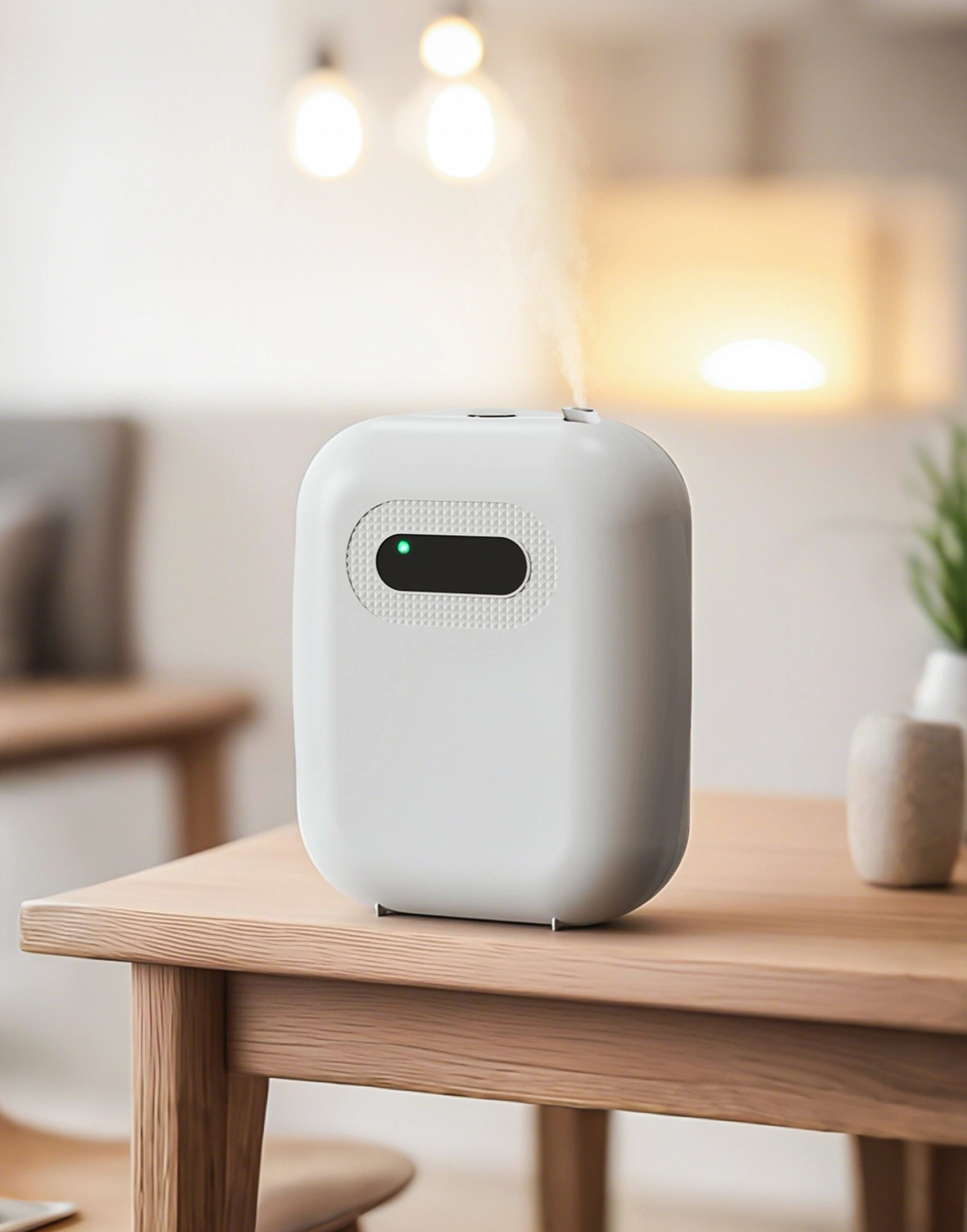
Map your space by these five factors before requesting a quote:
- Total cubic volume, not just floor area, because scent disperses three‑dimensionally
- Air changes per hour from HVAC or ventilation, which dictates how frequently scent particles are replaced
- Zone separations: an open‑plan retail floor behaves differently from a corridor‑laden hotel floor
- Ambient odour sources such as kitchens, cleaning products, or fresh paint that will compete
- Control requirements: multi‑location brands typically need centralised app management, while a single boutique may be fine with manual settings
I have seen procurement teams focus intently on the fragrance oil cost per litre but overlook that a high‑volume HVAC diffuser uses more oil over the same period than a standalone unit covering a smaller area. The cost conversation should always tie back to the space volume and runtime rather than compare oil prices abstractly.
If your space exceeds 500 square meters and has central air handling, an HVAC‑integrated system almost always yields more even coverage than wall‑mounted standalone units, and it eliminates the visual clutter of multiple devices. Scent‑Share’s model 19 can be paired with an app to control scheduling, and its aluminium body holds up in mechanical rooms where equipment vibration is constant.
What Are the Most Frequent Ambient Scenting Mistakes?
The errors that derail ambient scenting programs are rarely about the scent itself. They are about placement, concentration, and lack of a feedback mechanism.
The most damaging one is over‑scenting. When staff notice the smell, they think it is working. In reality, staff adapt to the scent within minutes and become a poor reference for intensity. A customer who enters fresh registers the scent far more sharply. The correct calibration point is for a new visitor to notice something pleasant without being able to identify from where it is coming. That typically requires setting the diffuser to 30–50 percent of what feels “barely there” to the person managing it.
Another common failure is matching fragrance character to the space without first testing under operational conditions. A light citrus profile that works beautifully in a glass‑walled showroom can become entirely lost in a textile‑heavy furniture showroom where fabrics absorb scent. The reverse is equally problematic: heavy woody oriental notes can accumulate in small, enclosed rooms and become oppressive within hours. I always recommend running a one‑week trial with daily feedback from a few trusted customers rather than relying on the client’s own nose.
Placement errors rank a close third. Installing a standalone diffuser within three meters of an air return duct will pull much of the scent straight into the HVAC system and exhaust it elsewhere. Similarly, pointing the output head toward an open doorway loses fragrance to the outside. Mapping the airflow first and positioning the unit in a location where the air current already travels toward the occupied zone is a simple step that is often skipped.
Common Questions From Business Owners Considering Ambient Scenting
I already have a good‑looking space. Will adding a scent feel like a gimmick?
It can if the scent is too pronounced or mismatched to the visual tone of the environment. A minimalist design studio would be undermined by an aggressive vanilla‑amber cloud, just as a cosy café would feel cold with a sharp green citrus. The scent has to act as an invisible layer that aligns with what the eyes already register. When the integration is correct, visitors report that the space “feels better” without ever attributing it to smell. In my experience supporting hotel and retail installations across 68 countries, scent only becomes a gimmick when it calls attention to itself rather than to the brand.
How long does it take before ambient scenting shows measurable results?
Expect a minimum of 30 days of consistent operation before drawing conclusions. The first week is about tuning the output to the right level. The second week customers begin to unconsciously associate the scent with the space. By the fourth week you can start comparing metrics such as dwell time, repeat visit rate, or survey scores against the pre‑scent baseline. Businesses that evaluate after two weeks often abandon good programs simply because the sensory adaptation period was not given enough time.
Can ambient scenting work in a space that also serves food?
Yes, and many restaurants use it strategically to neutralise kitchen odours while introducing a subtle complementary note around the dining area. The key is selecting a fragrance family that does not compete with food aromas. Soft citrus, light white tea, and sheer green notes blend well without suppressing the diner’s ability to smell their meal. The diffuser should be installed near the dining zone and away from the kitchen exhaust path so the two scent streams do not mix directly. One additional consideration: in open kitchen concepts, the background scent should be nearly imperceptible so that the food itself remains the primary olfactory focus.
I have multiple locations. Will the scent vary from site to site?
Only if the hardware settings and oil stock are managed inconsistently. With a centralised Bluetooth or WiFi control system, you can push identical programming to every unit across locations, removing manual variation. The fragrance oil itself is batch‑controlled, so as long as you order from the same manufacturer, the scent profile will match across sites. I have worked with hotel chains operating in different climate zones where identical hardware and identical oil produced the same guest‑perceived intensity after adjusting for HVAC runtime differences. The control technology makes cross‑location consistency a straightforward operational task rather than a creative one. If you are evaluating multi‑site rollout, share the floor plans and HVAC specifics of a sample location with your partner and ask for a site‑specific calibration plan, then compare notes before scaling. For a practical assessment of your space’s requirements, you can reach Scent‑Share at [email protected] or call +86 185 6557 5758.
If you’re interested, check out these related articles: