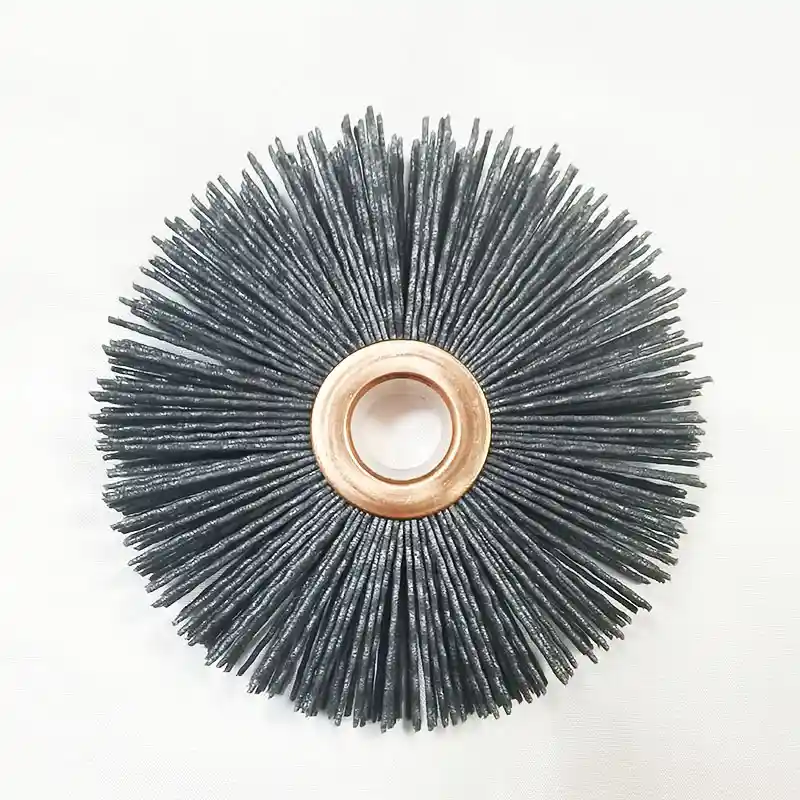

Stem mounted wheel brushes are essential for industrial grinding and rust removal, but the difference between a brush that wears out in weeks and one that holds up for months often comes down to specification, not just price. I have seen many production lines where the correct wire type and stem fit extended tool life significantly, sometimes doubling the interval between replacements. This article covers the design features, selection criteria, and custom options that determine how a stem mounted wheel brush performs under real industrial conditions.
Design of a Durable Stem Mounted Wheel Brush
A stem mounted wheel brush consists of a circular brush body with a central arbor and a protruding stem for mounting into a power tool. The brush face is densely filled with wire filaments, typically crimped or knotted, held by a stamped metal cup or plate. Durability depends on wire gauge, filament density, and the quality of the stem connection.
In our manufacturing experience, brushes with a thicker stem base and properly tensioned wire knots resist deformation under high-speed rotation and aggressive material removal. For rust removal on heavy steel plate, a knotted wire configuration with 0.014 inch or 0.020 inch carbon steel wire provides aggressive cutting action and resists breakage longer than finer wires.
The stem itself is a threaded or hexagonal shank that must handle torque without loosening. A poorly brazed stem will fail prematurely, so we pay close attention to stem attachment during production.
Wire Type Selection for Grinding and Rust Removal
Choosing the right wire type is the single most critical decision. The two main categories are crimped wire and knotted wire, and each suits different tasks.
| Wire Type | Structure | Best For | Aggressiveness | Wire Life |
|---|---|---|---|---|
| Crimped Wire | Individual wires crimped into small waves and twisted together | Light to medium rust removal, paint stripping, surface cleaning | Moderate | Shorter, wires flex and break over time |
| Knotted Wire | Wires twisted into tight rope-like knots | Heavy rust, weld scale, deep pitting removal | High | Longer, knots hold together longer |
For large surface areas where a uniform finish matters, crimped wire provides a wider contact pattern and less gouging. For thick rust layers or weld preparation, knotted wire penetrates faster. I often advise customers who handle mixed production to keep both types on hand and switch based on the job.
Brush diameter ranges from about 3 inches to 6 inches for bench grinders and hand tools. A larger brush covers more area but requires more horsepower and a lower RPM. Matching diameter to your grinder’s RPM rating prevents wire breakage. Face width, the thickness of the brush body, affects how many wires contact the workpiece at once. A wider face smooths surfaces faster but demands more torque from the motor.
Stem Dimensions and Spindle Compatibility
The stem is not an afterthought. Common stem diameters are 1/4 inch, 3/8 inch, and 1/2 inch, with hex or round shanks. Measure the collet or chuck depth on your grinder and confirm the brush stem fits securely with at least 1/2 inch of insertion. If the stem is undersized, the brush can wobble under load.
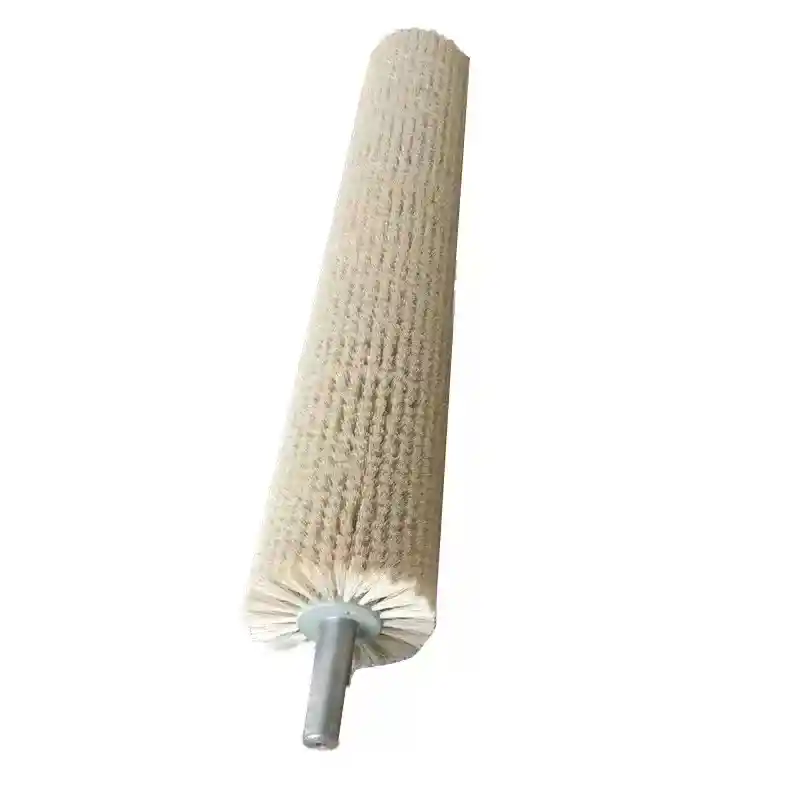
If your machine has a non-standard spindle or a metric thread, it is worth confirming compatibility before ordering. We frequently produce custom stem dimensions for clients with Japanese or European grinders, where off-the-shelf North American shanks do not fit. Reach out at [email protected] with your machine details and we can advise on the correct fit.
Custom Specifications to Extend Service Life
Standard catalog brushes work for general use, but for high-volume production environments, a custom stem mounted wheel brush almost always pays off. Adjusting the wire hardness, filament density, stem length, and overall diameter to match your exact workpiece shape and machine parameters avoids the premature failure that comes from forcing a generic brush into a specialized job.
We have worked with customers who were replacing brushes weekly because the wire gauge was too fine for the application. By switching to a thicker wire and increasing the knot density, brush life jumped to over a month of continuous use. Customization does not always mean a price increase; often it means buying the right brush once instead of reordering the wrong brush repeatedly.
Our manufacturing plant in Anhui Province has 16 years of production experience, and the team can produce small batches or full container loads, with free samples to verify performance before committing to an order. For OEM or ODM requirements, we support development from drawing to final inspection.
Maintaining Consistent Performance in High-Volume Operations
Even the best brush will degrade if used incorrectly. First, always run the brush at the recommended RPM; overspeeding causes wire loss and dangerous flying debris. Second, allow the brush to cool between continuous cycles on heavy stock, as heat buildup softens wire and reduces cutting ability. Third, inspect the brush face regularly for uneven wear, which often indicates misalignment or loose mounting.
In production environments where a consistent surface profile is critical, we recommend scheduling brush replacement based on hours of operation rather than waiting for visible failure. This prevents rejects from dull or deformed brushes.
A stem mounted wheel brush that works exactly right for your grinding task is less expensive over time than a cheap brush that fails quickly. If you regularly process steel plate, castings, or welded assemblies and need reliable rust removal, we can help you specify the correct wire type, stem dimensions, and brush configuration for your lines. Send your part number, machine specifications, and annual usage quantity to [email protected], or call +86 1580 0932 713 to discuss your requirements directly. With 16 years of brush manufacturing and export experience, we will match you with a cost effective solution that holds up shift after shift.
Common Questions About Stem Mounted Wheel Brushes
What is the difference between a stem mounted wheel brush and a cup brush?
A stem mounted wheel brush has a flat or slightly depressed face with wire extending radially; a cup brush has a deeper cup with wire protruding from the rim. Wheel brushes are better for flat surface grinding and edge work, while cup brushes excel at cleaning contoured surfaces. For heavy rust on steel plates, a wheel brush covers more area per pass.
Can I use a stem mounted wheel brush with a hand held angle grinder?
Yes, as long as the brush’s maximum safe RPM matches or exceeds the grinder’s no-load RPM. Secure the workpiece and wear full face protection. Keep the brush flat on the surface to avoid gouging. A knotted wire brush with a reinforced stem improves control on hand tools.
How do I determine the correct stem diameter for my machine?
Measure the collet or chuck opening. The stem should be slightly smaller than the opening to allow insertion, but not so loose that it wobbles. If in doubt, provide the machine make and model to your brush supplier. We frequently match stems to specific grinder models at the factory.
What wire material is best for rust removal on stainless steel surfaces?
Use a stainless steel wire brush to avoid carbon steel contamination that can cause rust spots on stainless. For light rust, a crimped stainless steel wire brush works well; for heavier scale, knotted stainless steel. Test a sample brush on a scrap piece to confirm the finish before committing to a batch.
How often should I replace my stem mounted wheel brush?
Replacement depends on usage intensity. In continuous high-speed grinding, a brush may wear visibly after 20 to 40 hours. Replace when wire loss exceeds 30% or when the brush no longer produces the desired finish. If production quality depends on a specific surface roughness, define a replacement interval in hours and keep spares on hand. Share your requirements and we can help determine the right replacement schedule and brush specification.
If you’re interested, check out these related articles:
advantage of hx cylindrical nylon brushes
brass brushes work perfectly for pipe cleaning
advantage of hx cylindrical sanding brushes
brushes for steel wire industries cleaning descaling derusting polishing