Commercial fragrance trends in North America are shaping a new playbook for brands, one where the scent itself matters less than the precision of its delivery. In my work with hotel groups and retail chains across the continent, I have watched sophisticated IoT-controlled diffusion systems replace basic standalone units, and decision-makers increasingly ask not “which scent should we use” but “how can we ensure that scent reaches every corner uniformly.” This shift toward technology-first scenting is redefining the commercial fragrance landscape, and for businesses that understand it, the reward is a deeper, more consistent brand experience that feels intentional rather than incidental.
Shifts in North America’s Commercial Fragrance Preferences
The common assumption is that commercial fragrance trends are about moving from citrus to oud, but the real shift is subtler. North America’s market is currently moving away from purely scent-driven decisions toward a model where fragrance and hardware are chosen as a single system. I recall a conversation with a US-based hotel chain early last year: their primary concern wasn’t what the lobby would smell like but whether they could maintain that scent consistently across three floors with a 12-foot ceiling. That hardware-first mindset is now dominant. Brands are favoring neutral, biophilic blends (think rain-washed greens, soft woods, and ozonic notes) not because they are new, but because those scent profiles diffuse evenly across large spaces without clashing with a building’s existing air profile. The preference for programmable, adjustable intensity also means that a scent can shift from morning energy to evening calm, creating a dynamic olfactory journey that static reed diffusers simply cannot replicate.
What Are the Biggest Commercial Fragrance Trends in North America Right Now?
Right now, three trends stand out. First, the move to HVAC integration is accelerating; more than half of the commercial scent installations we support in North America now involve direct HVAC tie-in rather than standalone diffusers. Second, there is rising demand for “scent stories” , a series of fragrances that evolve through a guest journey, from lobby to corridor to room. Third, brands are requesting data dashboards that show consumption rates, fan status, and refill alerts, reflecting a need for operational transparency that did not exist a few years ago. These are not surface trends; they reflect a maturation of scent marketing from a nice-to-have amenity to an accountable brand asset.
Smart Technology Is Redefining Fragrance Deployment
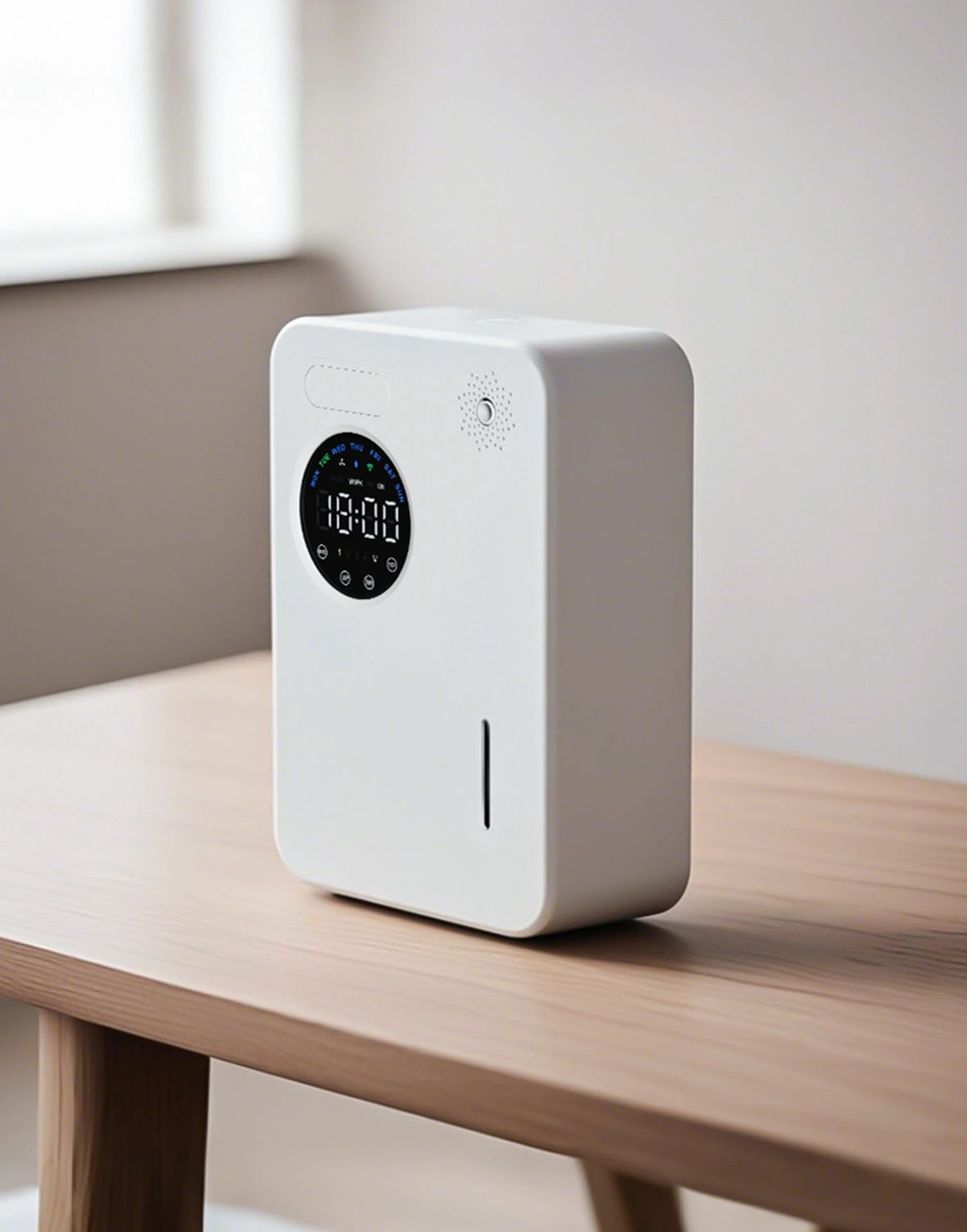
Technology is the hidden engine behind every successful commercial fragrance program I see today. Bluetooth and WiFi-enabled diffusers allow facility managers to adjust scent intensity, set schedules, and trigger refills from a phone. I work regularly with a Bluetooth app-controlled commercial scent oil diffuser that covers up to 300 cubic meters and runs 24/7 without manual intervention, which makes it suitable for boutiques and smaller hotel lobbies. On the higher end, our HVAC scent diffuser system integrates directly with a building’s air handling unit to scent up to 8,000 m3, and we offer a dual-system variant for multi-zone buildings that require independent scent channels. The real value of this connectivity is not gadgetry; it’s the ability to guarantee that every guest entering a lobby at 8 a.m. experiences the same scent intensity as one arriving at 6 p.m., day after day.
 ### How Are Smart Diffusers Changing Scent Marketing in Large Spaces?
Smart diffusers solve the coverage inconsistency that plagued earlier scent marketing efforts. In a mall hallway, for instance, a single powerful unit at the midpoint can create a scent zone, but without real-time feedback, air currents can thin the fragrance on one end while overwhelming the other. Smart systems use sensor-driven adjustments and app-based scheduling to compensate. I have seen this directly with the dual-system HVAC diffuser we produce: it can independently manage two separate fragrance programs through one master unit, allowing a retail flagship to run a signature scent in the showroom while a softer welcome fragrance plays in the entryway. That precision was unimaginable a decade ago.
Why Diffuser Hardware Outweighs Fragrance Selection
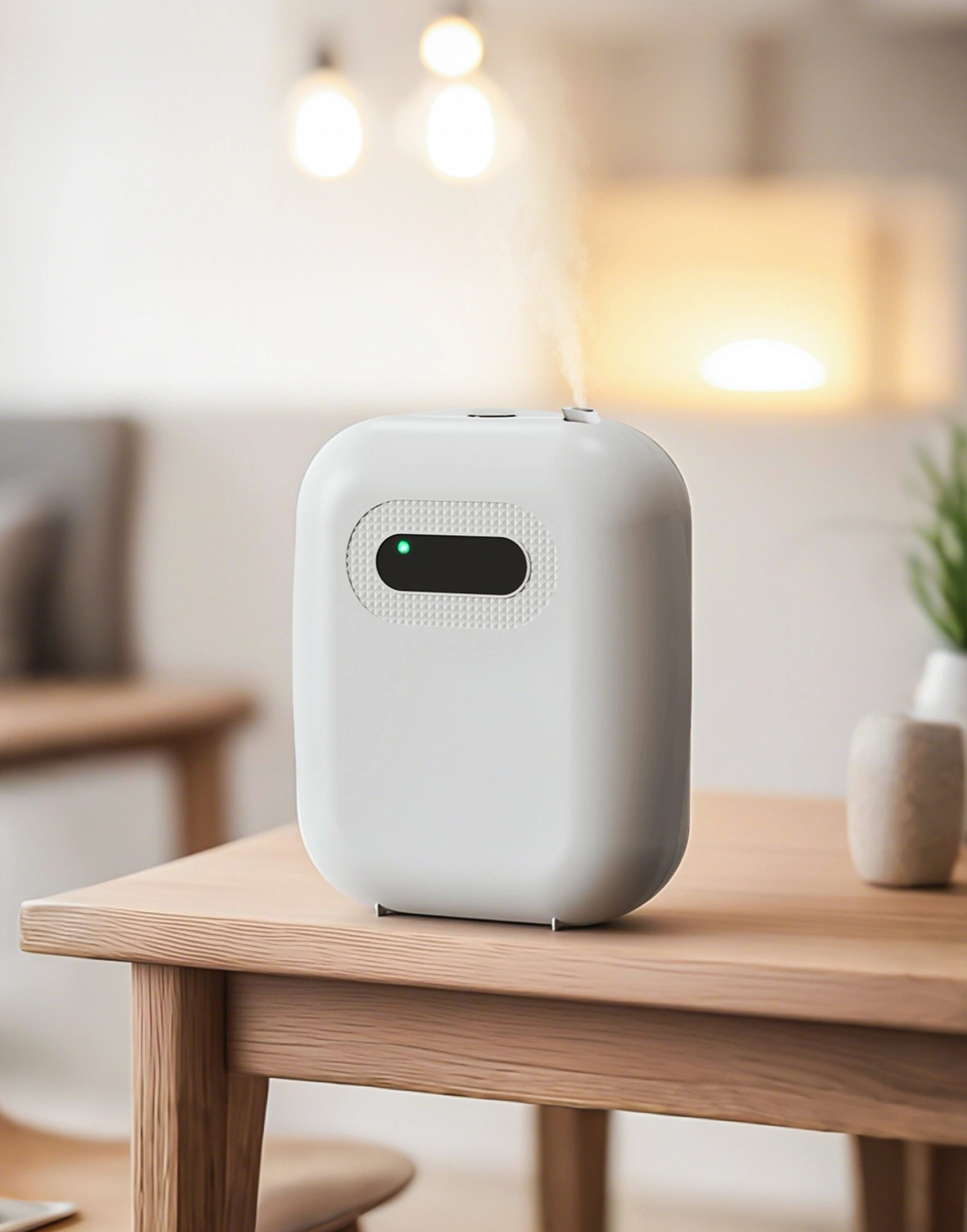
Choosing a fragrance is a small part of the equation. The real determinant of whether a scent program works is the diffuser hardware’s compatibility with the space. I have visited clients who purchased premium fragrance oils only to have them sour in the air because their cold air diffuser couldn’t atomize the oil at the right velocity. HVAC-integrated diffusers, by contrast, leverage the building’s own airflow to distribute scent molecules evenly, eliminating hot spots. But HVAC is not always the answer: for boutiques or offices with limited ceiling access, a battery-powered wall-mount aroma oil dispenser that covers 200 m3 can be a smarter, more flexible option. The key is matching the machine to the environment, not forcing the environment to accommodate the machine.
What Type of Diffuser Is Best for Large Commercial Spaces?
For spaces exceeding 1,000 m3, HVAC scent systems are typically the best choice. They distribute fragrance uniformly, operate quietly, and tie into existing maintenance schedules. A standalone commercial diffuser with a built-in fan can work for mid-sized spaces, but once you cross the 3,000 m3 threshold, you really need an integrated system like the HVAC scent diffuser we build, which pushes scent through existing ductwork. That approach keeps scent particles suspended longer and reduces oil consumption per cubic meter. The table below summarizes common options we supply, drawn from our product specifications:
| Diffuser Type | Coverage (m3) | Control Method | Ideal Space |
|---|---|---|---|
| Wall-Mount Battery Dispenser | 200 | Manual / App | Boutiques, small lobbies |
| Desktop Bluetooth Diffuser | 300 | Bluetooth App | Offices, showrooms |
| Standalone Commercial Diffuser | 300 | Bluetooth App | Retail stores, mid-size lobbies |
| HVAC Scent System | 3,000–8,000 | Bluetooth / WiFi | Hotels, malls, airports |
| Dual-System HVAC | 5,000–15,000 | Bluetooth App | Multi-zone buildings |
If your project spans multiple zones with separate air handling units, confirming coverage overlap before finalizing your equipment list avoids costly rework. Email us at [email protected] with your floor plan, and we will recommend the appropriate HVAC or standalone configuration for each area, matched to your square footage and airflow layout.
Practical Steps for a North American Scent Program
I have been part of dozens of scent program rollouts, and the ones that succeed follow a disciplined process. First, audit the space: measure cubic volume, map airflow patterns, and identify scent-wash areas. Second, pick the hardware that matches that volume and your operational reality — do you have HVAC access, or do you need portable units? Third, choose a fragrance not by personal preference but by brand alignment and diffusion properties. A heavy, resinous blend might smell luxurious in a sample vial but feels oppressive when atomized across a 500 m2 retail floor. Fourth, coordinate installation to avoid disruption, and schedule refills based on the diffuser’s consumption data. On the compliance side, North American businesses should verify that fragrance oils meet IFRA standards and any local VOC regulations; I always advise clients to request an SDS sheet from their supplier upfront.
How Much Does a Commercial Scent System Cost in North America?
Cost depends on scope and technology. A simple standalone diffuser for a small boutique might be a few hundred dollars, plus oil refills every few months. A full-scale HVAC integration for a hotel chain with multiple zones can run into five figures, but the per-square-foot cost often becomes economical when amortized over months. The most common budget blowout I see is underestimating oil consumption; a moderate-busy hotel lobby with an HVAC system might consume one to two liters of fragrance oil monthly. Factoring in that recurring cost from the start prevents surprises. Requesting a quote from a factory-direct supplier like Scent-Share gives you a benchmark for hardware cost before you engage a local distributor.
What Comes Next for Commercial Fragrance in North America
I expect AI to become the next game changer. Not to replace human scent designers, but to refine. Imagine a diffuser that learns a hotel corridor’s foot traffic pattern and automatically spikes scent intensity before a scheduled arrival block, then dials back during quiet hours. That level of data-driven scenting is already being tested in some regions, and North America, with its appetite for measurability, will likely lead adoption. I also see a growing demand for regional scent identity: a West Coast natural wellness vibe versus an East Coast urban energy, each expressed through different families of notes. These developments will push suppliers to offer faster custom fragrance turnaround and more granular control software.
Will AI Replace Human Scent Designers?
No. No algorithm can tell a brand story or translate an emotion into a blend of molecules the way an experienced formulator can. AI will serve as an optimization layer, suggesting structural modifications to improve diffusion or reduce cost, but the soul of a scent will remain human. In my experience, the most memorable commercial fragrances come from a deep collaboration between a brand’s creative director and a scent specialist who can listen and interpret, not from a machine.
Common Questions About Commercial Fragrance Trends in North America
What scent notes are trending in North American commercial spaces right now?
The hottest trend I see is a pivot toward water-like and ozonic profiles combined with soft woods and subtle green herbs, a departure from the heavy orientals that dominated a few years ago. These blends feel clean, modern, and less intrusive, making them safer for multi-brand environments such as mixed-use developments and shared lobbies, where an assertive signature scent might conflict with neighboring tenants.
Is HVAC scenting really better than standalone diffusers for large hotels?
It depends on layout. For hotels with central air handling, HVAC integration delivers consistent saturation across floors and eliminates the need for multiple standalones. However, some boutique hotels without ducted systems still achieve excellent results using strategically placed standalone diffusers with fan assist. The real differentiator is whether the system can adjust dynamically to different times of day, and that is where app-controlled standalone units with programmable scheduling shine.
How do I choose a fragrance oil supplier that can keep up with trends?
Seek a supplier that does its own R&D and formulation in-house rather than reselling catalog scents. They can respond faster when you want a seasonal update or a trend adaptation. I recommend checking whether the supplier can provide performance data such as cold throw and longevity, and whether they offer a library of at least 200 to 300 fragrance types to ensure you are not locked into a narrow palette.
Do glass reed diffusers still have a place in modern commercial scent initiatives?
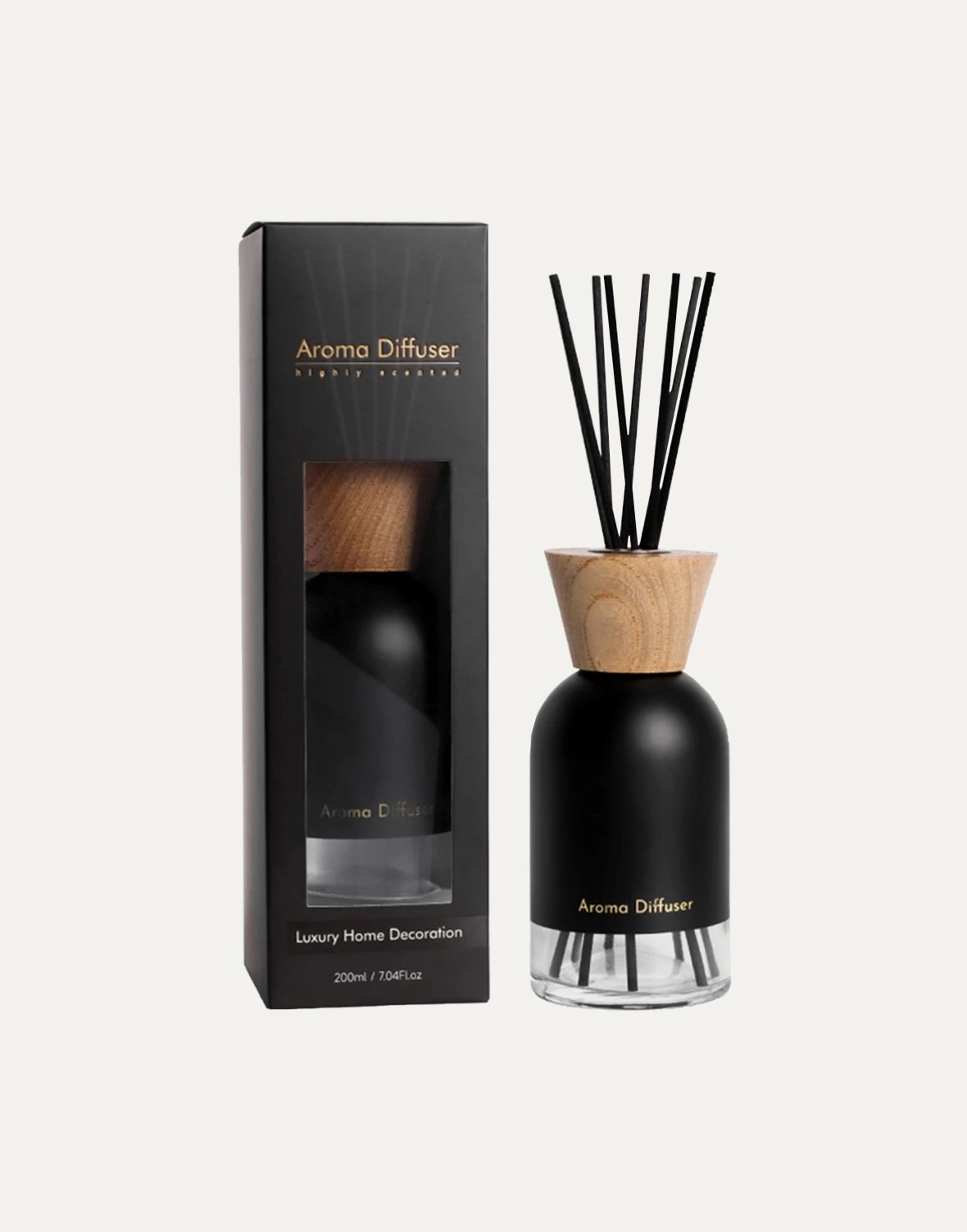
Yes, for specific use cases. I have seen high-end boutiques use minimalist artisan reed diffusers in fitting rooms where electric diffusers would feel intrusive. They also serve as a gift-with-purchase or lobby decor that doubles as a passive scent source. However, they cannot scale and offer zero intensity control, so they function best as accents within a larger scent strategy.
What is the typical lead time for developing a custom signature scent?
From brief to shipping, a well-structured custom fragrance project typically takes 6 to 10 weeks, depending on the number of reformulation rounds and whether international shipping is involved. I always suggest allowing an extra two weeks for tweaks after the initial sample evaluation, because the first iteration rarely aligns perfectly with the brand’s vision. A clear brief with reference scents and the emotional goal cuts the timeline significantly. If your project requires alignment across multiple locations, confirming coverage requirements and hardware selection before finalizing the fragrance is a good next step.
The commercial fragrance market in North America is moving fast, and the brands that pair the right scent with the right hardware from the start are the ones that build lasting guest loyalty. If you are evaluating a new scent program or upgrading an existing one, reach out at [email protected] or call +86 185 6557 5758 / +86 134 2048 5758. Share your space specifications and timeline, and I will personally ensure you receive a fragrance sample matched to the most suitable diffuser hardware for your footprint. We support clients in 68 countries and I oversee scent installations from initial concept through post-install support, so the questions that matter at each stage are the ones I work through every day. For a no-obligation consultation, send us an email.
If you’re interested, check out these related articles: