The past few years have reshaped how we think about office environments, and nowhere is that shift more visible than in office scenting trends. Floor plans now ebb and flow between collaborative huddles and focused solo work. The office is no longer a static backdrop but a place people choose when they want connection, inspiration, or a change of scenery. Having spent over a decade designing scent solutions across 68 countries, I have watched office scenting evolve from a simple air-freshening afterthought into a strategic tool that shapes mood, signals brand identity, and makes a space feel worthy of showing up for. The most decisive trend I see right now is not about proving that scent boosts productivity—that data is well established—but about creating emotional workplaces that feel alive, personal, and noticeably human.
The Shift from Productivity to Well-Being in Office Scenting
Early office scenting conversations revolved almost entirely around measurable output: does a citrus aroma improve typing speed, or does peppermint sharpen focus during long meetings? Those questions still matter, but they frame scent as a performance tool rather than an experience layer. Today, facility managers and brand teams are prioritizing well-being. They want employees to walk into the lobby and feel a subtle lift, not because the diffuser is dosing a cognitive stimulant, but because the atmosphere signals care.
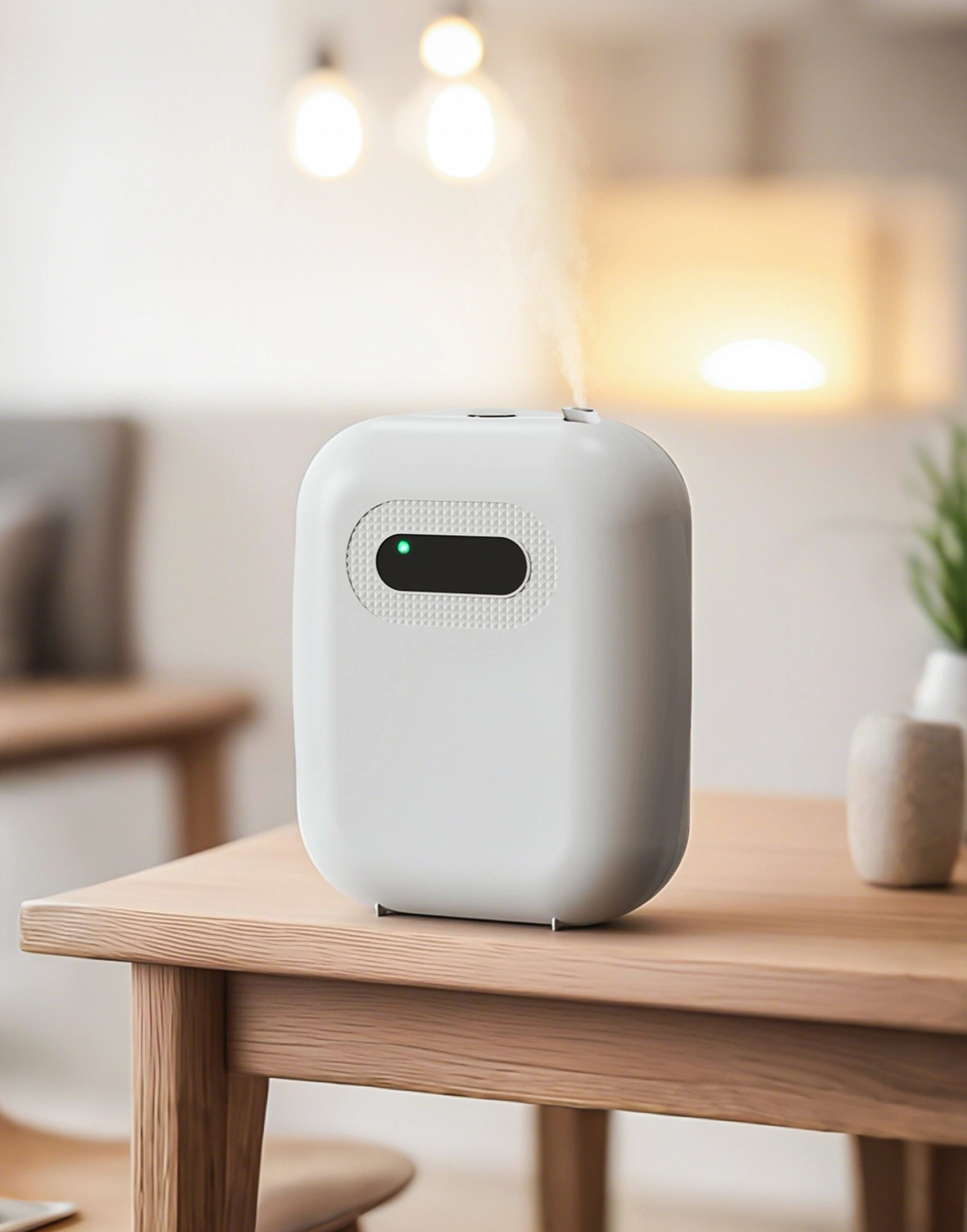
Three factors are driving this shift. First, the war for talent has forced companies to treat workplace quality as a retention lever, and a considered scent profile contributes directly to how people rate their environment. Second, post-pandemic awareness around indoor air quality has merged with scent delivery; a well-designed system that integrates with HVAC filtration sends a message of safety and attention to detail. Third, neuroscience keeps confirming that the olfactory system is tightly wired to emotional memory, so a workspace that smells distinctive and pleasant becomes associated with the warmth of belonging rather than the weight of obligation. In practice, this means offices are moving away from aggressive, loud fragrances toward softer compositions that support the architectural mood without demanding attention.
How IoT and Smart Diffusers Are Changing Office Scent Delivery
Office scenting is undergoing a hardware revolution that is just as important as the fragrance inside the bottle. Standalone plug-in units are giving way to networked, IoT-enabled systems that treat scent as a programmable building service, not unlike lighting or HVAC. From our own product development, I have seen demand shift sharply toward devices that connect via Bluetooth or WiFi and offer app-based scheduling, multi-zone control, and usage analytics.
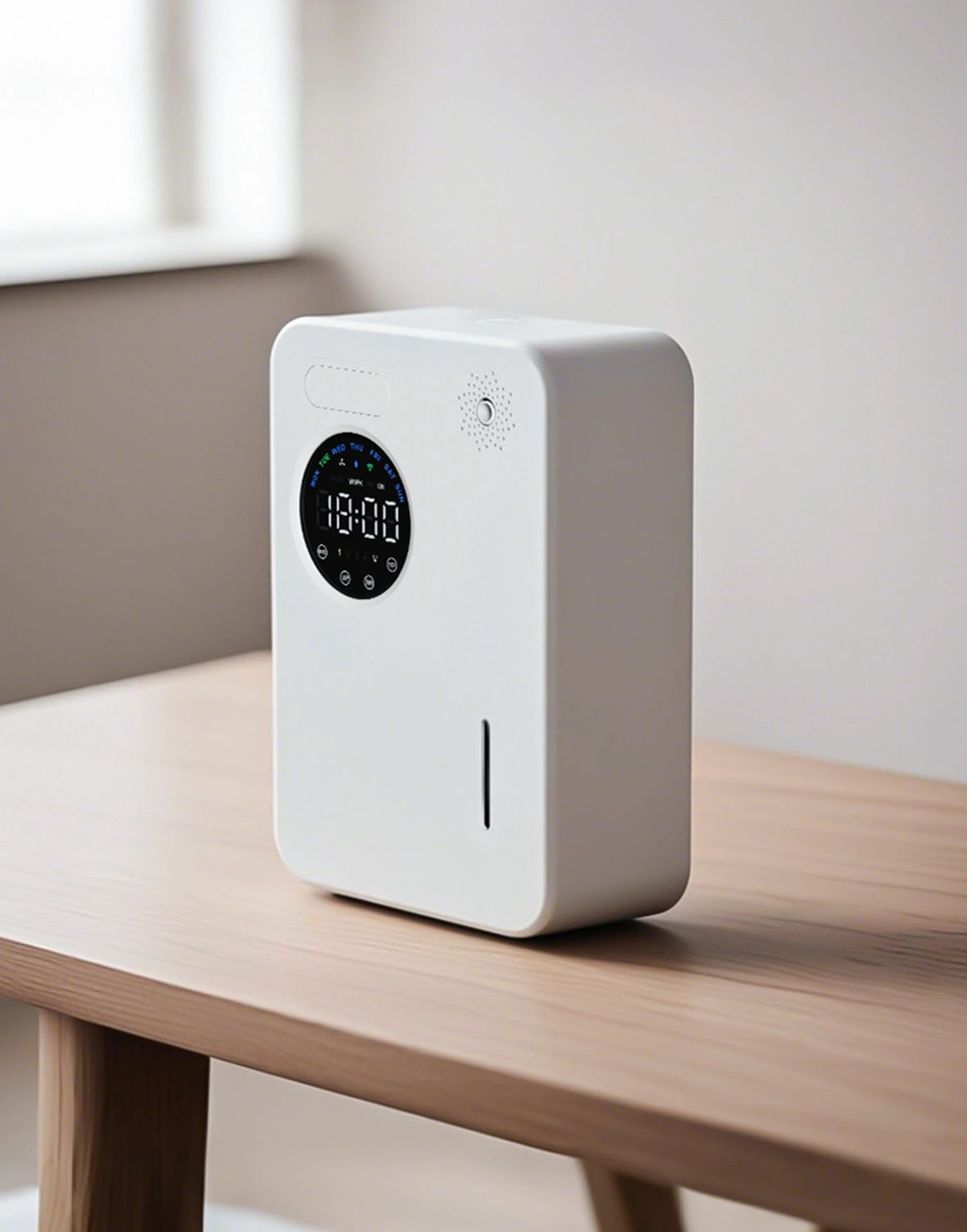 The practical advantages are enormous. A single facility manager can adjust intensity, start or stop diffusion, and monitor oil levels across an entire campus without walking a single floor. Smart systems also enable sequencing: for example, a hotel chain might energize the office lobby with a bright green tea in the morning and transition to a calming sandalwood after lunch, entirely through a pre-set schedule. The trend toward data-driven scenting means that usage reports now inform refill logistics, preventing outages and helping procurement teams optimize consumable costs. When combined with occupancy sensors, a diffuser can even scale output up or down in real time, reducing waste during low-traffic periods. For any organization planning a multi-year office investment, choosing an IoT-compatible diffusion platform is no longer a luxury—it is the baseline that protects against immediate obsolescence.
Personalization and Hybrid Workspaces Drive New Scent Strategies
Flexible seating, hot-desking, and hybrid schedules have dissolved the one-size-fits-all model of office design. It is no longer realistic to pump one uniform fragrance through the entire floor plan and assume it fits every moment. Instead, scent zoning is becoming the new standard. Breakout zones might carry an uplifting citrus to encourage spontaneous collaboration, while quiet focus rooms are scented with a neutral, barely-there skin musk that reduces sensory friction.
Personalization is also expanding from the macro to the micro level. We are seeing growing interest in small-footprint, individual diffusers that can be placed at a desk or within a phone booth-sized pod, giving employees a degree of agency over their immediate sensory environment. This does not mean every cubicle gets its own scent signature—that would quickly become chaotic—but it does mean a curated palette of approved blends can be offered in different zones, letting people gravitate toward the atmosphere that matches their task and temperament. The firms that get this right treat scent as an extension of agile workspace philosophy: the environment flexes with the team, not the other way around.
The Rise of Biophilic and Natural Scent Profiles for Workplaces

The biophilic design movement, which brings natural textures, daylight, and greenery into built spaces, is now extending into fragrance formulation. Office scenting trends are mirroring this shift with a clear move away from synthetic, overly perfumey compositions toward ingredients that evoke the outdoors. Vetiver, cypress, wet stone, white tea, and fresh basil are replacing the generic “clean cotton” and harsh citrus-ozone blends of the previous decade.
This trend is partly aesthetic—people connect authenticity with nature—but it also has a cognitive dimension. Scents that subtly reference the outdoors can lower cortisol levels and ease the friction of spending a full day indoors. In practice, a financial services firm might scent its trading floor with a restrained blend of cedar leaf and bergamot, which feels focused yet not fatiguing, rather than the aggressive jolt of cold citrus that dominated earlier eras. Because these natural profiles are inherently softer, they require precise diffusion control to maintain presence without overwhelming the space, which is another reason that smart, HVAC-integrated delivery is becoming the preferred backbone.
Navigating Installation and Scalability for Multi-Location Offices
The most beautiful fragrance brief means nothing if the scented air cannot be delivered uniformly across a diverse real estate portfolio. One trend we see consistently in our global project pipeline is that procurement teams no longer accept a fragmented approach where each site sources its own local diffusers and oils. They want a single platform that can scale from a small satellite office to a corporate headquarters, supported by standardized installation protocols and centralized billing.
This is where technology selection and partnership matter enormously. For large open-plan floors, HVAC-integrated systems that attach directly to the air handling unit provide seamless coverage without visible hardware. For mid-sized rooms and executive suites, standalone commercial diffusers with standalone fans offer faster deployment and simpler maintenance. The table below compares typical equipment paths so you can match the technology to the space with confidence.
| Solution Type | Coverage Area | Installation Complexity | Best For |
|---|---|---|---|
| HVAC Scent System | Up to 8,000 m³ | High (requires HVAC access) | Whole-floor or whole-building distribution |
| Commercial Standalone Diffuser | 300–3,000 m³ | Low (wall-mount or free-standing) | Individual floors, lobbies, meeting rooms |
| Desktop/Small-Room Diffuser | 80–300 m³ | None (plug-and-play) | Executive offices, phone booths, flex pods |
| Battery Wall-Mount Diffuser | 200 m³ | Minimal (bracket-mount, no wiring) | Corridors, restrooms, quick retrofit projects |
Beyond hardware specs, look for a supplier that provides ongoing oil supply chain support and remote diagnostics. When a diffuser in Singapore drops offline at midnight, the facility manager in London should see it on a dashboard and dispatch a refill, not discover it three months later through a complaint. The future of office scenting is less about buying devices and more about subscribing to a managed scent experience that keeps every location consistent and fresh.
Designing Your Office Scenting Solution
The trends outlined here all converge on one practical reality: office scenting is now a sophisticated design discipline that blends emotional insight, hardware intelligence, and operational logistics. If your team is evaluating next steps, begin by defining the emotional center of each zone—what do you want people to feel when they enter this conference room, this lounge, this lobby? From there, the fragrance brief, the equipment selection, and the scheduling logic can follow in a straight line rather than a guessing game.
At Scent-Share, we work directly with facility teams to translate these emotional goals into precise, scalable solutions—from scent formulation through HVAC integration to ongoing refill programs—supported by a product catalog of over 300 fragrance types and diffusers that cover every space type. To start a conversation about your specific floor plan and scenting objectives, send your zoning requirements and an approximate square meter breakdown to [email protected] or reach us at +86 185 6557 5758. A well-scented office does not happen by accident; it is a deliberate act of care, and that care is visible the moment someone walks through the door.
Common Questions About Office Scenting Trends
Is office scenting only relevant for large corporate headquarters?
Not anymore. The drop in cost and complexity of smart diffusion hardware has made professional scenting accessible for co-working spaces, boutique agencies, and small satellite offices. In many cases, a single standalone Bluetooth diffuser with a thoughtfully chosen fragrance can deliver the same perceived quality as a full-building system. The key is matching the coverage area honestly—choose a device that meets the actual room volume rather than over-scaling.
How do you avoid scent fatigue when employees spend eight hours in the same space?
Scent fatigue occurs when the fragrance stays at a constant, undifferentiated intensity for too long. The solution is not to turn the system off but to program it responsively. Modern IoT diffusers can vary output by time of day, drop intensity during low-occupancy hours, and even rotate between compatible scent cartridges to maintain novelty. The goal is to keep the nose aware that something pleasant is present without ever being able to pinpoint it.
Do hybrid and hot-desking offices really need different scent zones?
Yes, because the sensory experience of a space directly influences the type of work people do there. A collaboration zone that smells sharp and energetic encourages conversation; a focus zone with a neutral, soft background reduces distraction. When the same employee moves between these settings throughout the day, the scent becomes a non-verbal cue that helps the brain switch modes. It’s a subtle but powerful way to reinforce the intended function of each area.
Can we integrate scent into an existing building management system?
Most current-generation smart diffusers are designed to integrate with BMS platforms via API or dry-contact relays, especially the larger HVAC-mounted models. Before purchasing, ask the supplier for their integration documentation and verify compatibility with your existing building automation provider. A well-integrated system can synchronize scent with lighting scenes, HVAC schedules, and occupancy patterns so that the entire environment shifts together.
What is the single most important trend for 2025 office scenting?
The convergence of emotional design and IoT delivery. The technology now allows us to ask not just “does this space smell nice” but “does the scent emotionally support what people are doing here right now?” Any office scenting program that starts with that question and then selects hardware to deliver it precisely is already ahead of the curve. If you are building a brief for a new office or refreshing a legacy installation, share your floor plans and we can help you match fragrance profiles and diffusion methods to each zone—reach us at [email protected] and we will walk through it together.
If you’re interested, check out these related articles: