
Sourcing flowers directly from Yunnan growers is the most effective way for international buyers to secure competitive pricing, verify quality firsthand, and build a reliable supply chain. The difficulty lies in knowing where to begin. Yunnan Province produces more than half of China’s cut flowers, with thousands of farms spread across Kunming, Yuxi, and Tonghai. Approaching them one by one online or through agents introduces communication gaps and trust risks. What I’ve seen transform the direct sourcing process is the right trade fair, specifically the Kunming International Flowers & Plants Expo (IFEX). It brings pre-qualified growers, exporters, and cold chain providers under one roof, turning an otherwise fragmented search into a structured, face-to-face sourcing program.
Why Source Directly from Yunnan
Yunnan’s high-altitude climate and long sunshine hours produce consistent flower quality that has made it China’s largest cut-flower supply base. For importers and wholesalers, buying directly from farms here removes markups from regional wholesalers and trading companies. Equally important, it gives you control over grade selection, post-harvest treatment, and packing standards. Instead of accepting whatever a middleman consolidates, you can specify stem length, bud openness, and bunch weight with the people who actually grow the flowers. Cold chain logistics from Kunming are mature, with dedicated airfreight corridors to major Asian, Middle Eastern, and European markets, so transit times are no longer the bottleneck they once were.
IFEX Kunming as a Direct Sourcing Platform
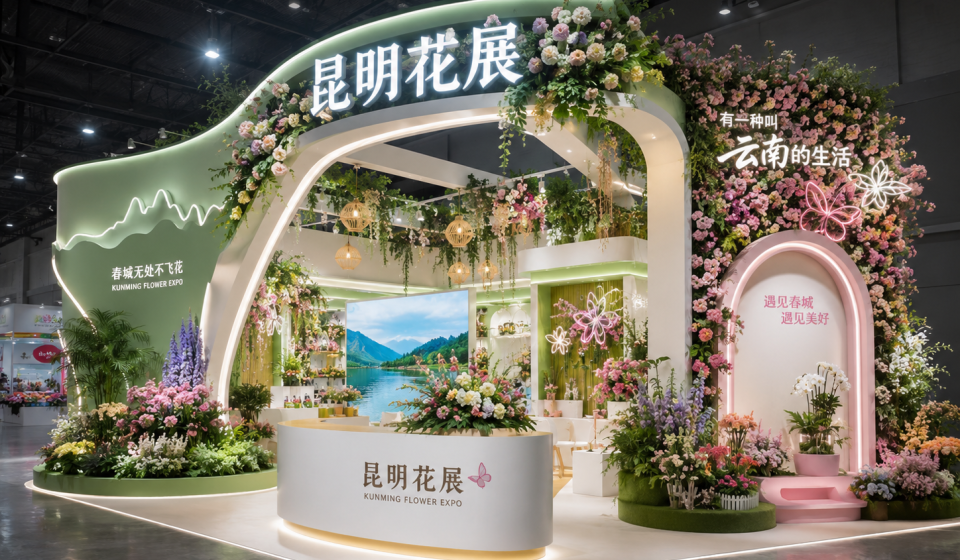
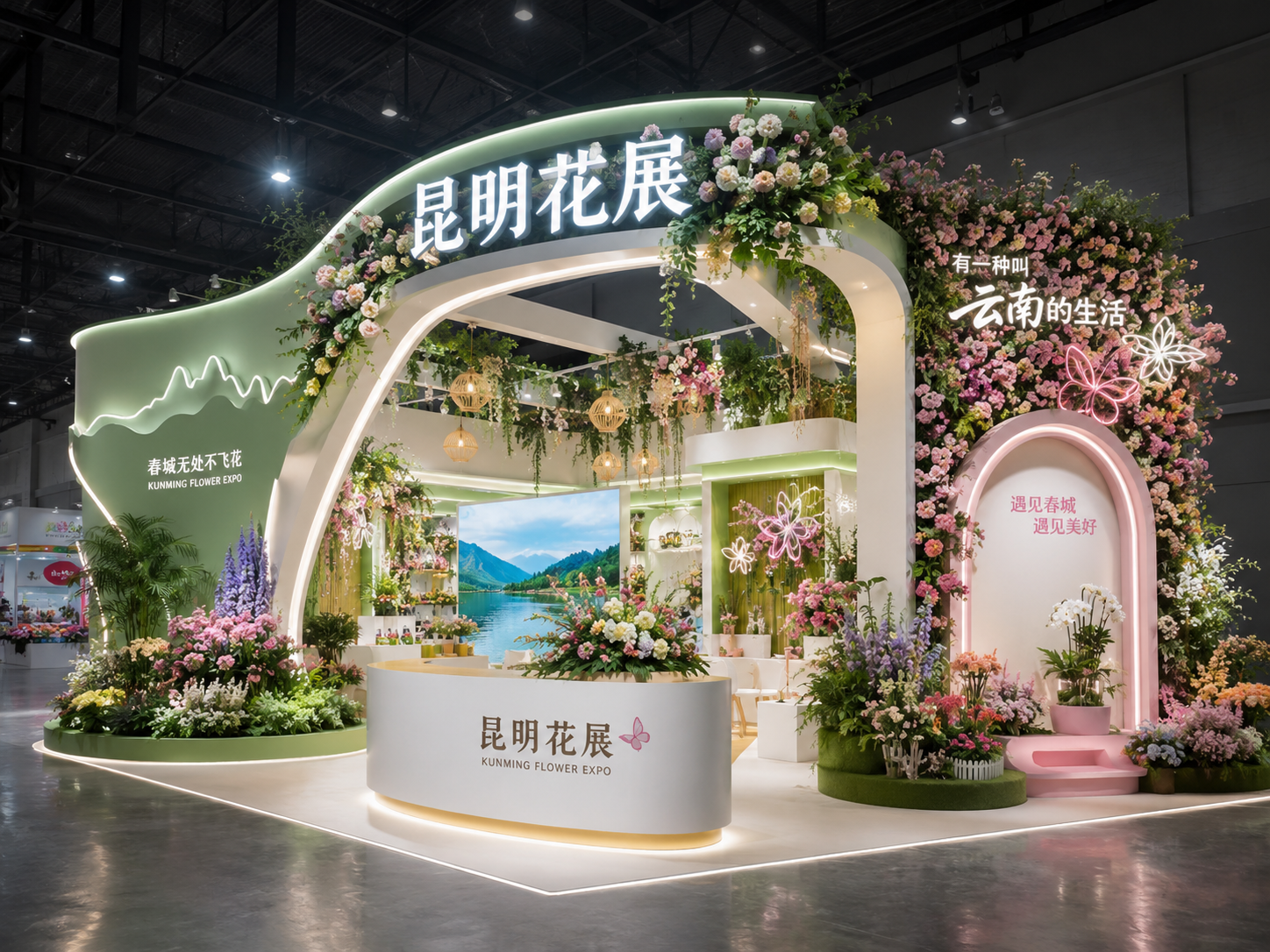
The Kunming International Flowers & Plants Expo (IFEX) is the largest industry event of its kind in Asia. Covering 50,000 square meters of exhibition space, it attracts over 30,000 professional buyers including distributors, florists, e-commerce players, and supermarket chains. For a buyer serious about direct sourcing, IFEX solves the two biggest early-stage problems: finding growers with export capability and verifying that capability before committing to an order. Exhibitor booths are organized along the entire supply chain, from breeding material and fresh-cut growers to packaging and logistics providers, so you can benchmark multiple suppliers side by side within a few days.
When I walk the exhibition floor, I see buyers who arrive with a printed list of target varieties negotiate with five or six farms in a single morning. That density of face-to-face meetings would take weeks if you were traveling to individual farms across Yunnan.
How to Identify and Vet Yunnan Growers at IFEX
Not every booth at a trade fair represents a production-scale grower. Some intermediaries rent space and present themselves as farms. My team has refined a practical screening method that works within a ten-minute booth conversation. First, ask for the farm’s GPS-tagged production site photos and the number of hectares under greenhouse. A legitimate grower can show these immediately. Second, inquire about their existing export certifications—GlobalG.A.P., MPS, or the specific phytosanitary arrangements they maintain with destination countries. Third, request a harvest calendar and ask what happens to their production during peak holidays; the specificity of their answer reveals operational depth.
Take photos of sample bunches, business cards, and booth literature with your phone. I have seen too many buyers try to rely on memory and then mix up suppliers later. IFEX also operates a matchmaking service that pre-schedules meetings based on buyer requirements, which further reduces the risk of spending time on unqualified exhibitors.
What Questions Should Buyers Ask at a Grower Booth
The standard opening question is “What varieties do you grow?”, but that only gives you a catalog. Instead, ask “Which two varieties have performed best in export markets this year, and why?” This tells you whether they track performance data. Follow with “What is your typical vase life after airfreight to [your market]?” and listen for a specific range rather than a vague guarantee. Then ask for a sample cold chain temperature log. If they cannot produce one, treat deeper quality claims with caution.
How to Evaluate Cut Flower Quality on the Spot
At the booth, inspect stem straightness and foliage color uniformity. For roses, check the opening stage and petal turgor; a grower who brings blooms at the optimal cutting point rather than fully opened ones understands the export window. Gently feel the stem base for firmness, and check for botrytis spotting. Taking parallel samples from different buckets helps you judge batch consistency, a signal of sorting discipline.
From Handshake to Contract at IFEX
Once you identify two or three preferred growers, it’s time to move from conversation to binding commitments. This is where IFEX’s dedicated trade zones, sometimes including private meeting rooms, make a difference. I recommend starting with a trial order of mixed varieties to test both product quality and the supplier’s logistics execution before scaling to full containers.
Negotiate MOQs directly. Many Yunnan farms will accept smaller trial shipments of 2,000–5,000 stems per variety, especially if the buyer demonstrates long-term intent and handles the logistics arrangement. On pricing, ask for both EXW and FOB Kunming terms. That separates the flower cost from the freight and packaging cost, giving you a transparent baseline. Confirm the lead time from order confirmation to container stuffing; in peak seasons like Valentine’s Day or Chinese New Year, that lead time can double, so lock it into the contract.
Make sure the draft agreement specifies the grade (e.g., export grade A), stem length in centimeters, bunch size, and the maximum allowable defect rate. If you are working in multiple languages, consider a bilingual purchase confirmation template that both parties can review on the spot. While lawyers are always advisable for large volumes, a clear one-page summary with photos of accepted samples prevents the most common post-shipment disputes.
If your sourcing program involves tight delivery windows for a holiday season, it is worth confirming your grower’s cold storage capacity and backup transport arrangements before finalizing your trial order. Reach out at [email protected] and our team can help you identify growers with documented export infrastructure.
Logistics and Import Compliance for Direct Flower Shipments
Getting flowers from a Kunming packing house to your warehouse involves three linked systems: cold chain, phytosanitary certification, and customs brokerage. Yunnan’s large-scale growers are familiar with forwarder collections, but I strongly suggest using a freight agent with specific floriculture experience, as temperature deviations can render an entire shipment unsellable. Airfreight is standard for fresh-cut flowers, with transit times of 12–36 hours to most Asian capitals and 36–72 hours to Europe or the Gulf. Sea freight is an option for preserved or dried flowers and for some low-sensitivity varieties if you have cold chain reefer access.
Before shipment, the grower must obtain a phytosanitary certificate from the local CIQ office. This document states that the consignment is free of specified pests. Check your destination country’s import requirements; Japan, the EU, and the US have distinct quarantine protocols that may require additional fumigation or inspection. I always advise buyers to ask the grower to send a scanned copy of the phytosanitary certificate before the consignment leaves its cold storage, giving you time to verify with your own broker.
Payment terms commonly include a 30% deposit via T/T with the balance against scanned shipping documents, or an irrevocable letter of credit for larger orders. Use the trade fair time to meet with the grower’s bank relationship manager if possible, as a face-to-face introduction smooths the subsequent documentation flow.
Common Questions About Direct Flower Sourcing from Yunnan
How do I start if I have never sourced from China before
Start by visiting IFEX Kunming. The compressed, multi-supplier format lets you compare farms, ask the same questions across booths, and gauge responsiveness, all within three days. In my experience, buyers who attend with a clear category focus, roses, carnations, potted orchids, etc., and a written checklist return home with at least three credible supplier shortlists rather than a vague stack of catalogs.
Is it safe to pay Chinese growers I just met at a trade fair
Payment risk is manageable when you follow a structured approach. Avoid paying full invoice amounts via unsecured channels. Stick to T/T with a deposit and balance against shipment documents, or open a letter of credit with a verified bank. The grower’s willingness to provide their export license number, past phytosanitary certificates, and a reference from a freight forwarder is a good sign. If a supplier pushes for 100% upfront payment without a verifiable export history, that is a practical reason to move to the next booth.
Can I source directly without visiting Yunnan
Technically yes, but practically the risks multiply. Remote sourcing forces you to trust photos and third-party inspection reports without ever seeing the packing house conditions, stem freshness, or sorting line standards. Face-to-face meetings at IFEX cut through that distance. They give you the non-negotiable benefit of holding the product in your hand and watching the supplier’s reaction when you ask for a modification. In programs we’ve supported, the conversion rate from initial samples to repeat orders is significantly higher for buyers who complete an in-person trial order visit.
What is the biggest mistake first-time direct buyers make
Rushing into large orders before testing the grower’s logistics performance. I’ve watched buyers place 20,000-stem orders on the last day of the show based on attractive booth samples, only to find cold chain gaps or quality drift in the actual shipment. A small trial order of 2,000–3,000 stems, shipped in two splits if possible, provides a low-cost validation of both product and process. Once that trial succeeds, scaling is fast and repeatable.
How soon after IFEX can I expect a first shipment
A trial shipment can often leave Kunming within three to five weeks after the fair, assuming the varieties you want are in season and the grower has existing export certification. That timeline depends on how quickly you finalize the contract, arrange payment, and book freight. Share your target delivery window and we’ll help you identify growers with suitable harvest cycles and export capacity, reach us at [email protected] or +86 10 5933 9349.