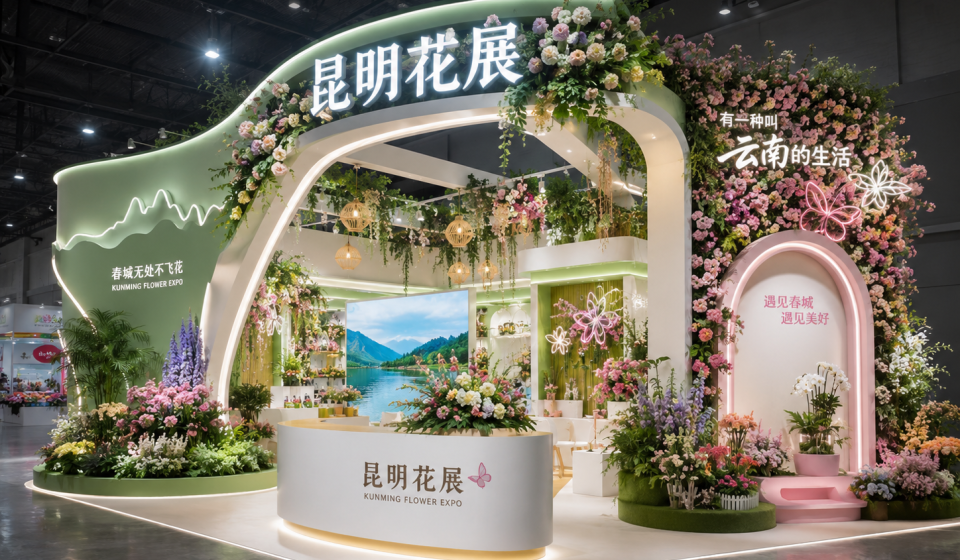

I have spent fifteen years analyzing floriculture trade shows across Asia, and I can say with confidence that the questions you ask flower suppliers at IFEX matter more than how many booths you visit. A well-prepared buyer uncovers gaps in cold chain logistics, export documentation, and quality control that a polished display can hide. In my work with the IFEX organizing team, I have seen that procurement managers who arrive with a structured question set consistently build stronger supplier networks. The ten questions below target the operational details that separate export-ready Yunnan growers from domestic wholesalers with a beautiful bouquet.
What Are Your Export Certifications and Phytosanitary Readiness?
The first filter in any supplier conversation should be export readiness. Yunnan is home to thousands of flower farms, but not all have the documentation infrastructure to ship internationally. Asking the right certification questions early saves you from investing time in a grower who cannot legally or practically get flowers to your market.
Which phytosanitary certificate do you hold for export to my country?
Phytosanitary certificates are country-specific, and a supplier who exports regularly to your region should be able to name the exact certificate and show a recent copy. I have observed that growers who hesitate or give vague answers on this question often handle only domestic orders. Ask for a sample certificate and check that the issuing authority matches the official plant protection organization in China. If the supplier cannot produce one within a minute, move on.
How recently have you completed an export shipment, and can you share the documentation timeline?
A supplier who shipped to Europe three months ago remembers the exact timeline: inspection date, certificate issuance, container loading, customs clearance. I recommend asking for the internal documentation checklist they use for export orders. In my conversations with buyers at past IFEX editions, those who obtained this timeline during the first meeting experienced fewer post-order documentation surprises.
How Do You Manage Cold Chain Logistics from Farm to Port?
Beautiful flowers at the booth mean nothing if they arrive at your distribution center wilted or botrytis-infected. Cold chain continuity from the moment of harvest until container loading at the port is the single biggest predictor of vase life performance. I often tell buyers that if a supplier cannot describe their cold chain steps in detail, they probably do not control it.
What precooling method and temperature do you maintain from farm to container?
Vacuum cooling is the standard for export-grade roses and many cut flowers, bringing the core temperature down within 30 to 60 minutes after harvest. Forced-air cooling can work but takes longer. Ask the supplier to specify the target temperature, usually 2 to 4 degrees Celsius for cut flowers, and how they verify it before boxing. Growers who rely on room cooling alone are not ready for long-haul sea freight.
How do you ensure cold chain continuity during transport from Kunming to the departure port?
Kunming to Shenzhen or Shanghai port is a multi-hour drive. The best exporters use temperature-controlled trucks with GPS-enabled data loggers that record conditions throughout the journey. Request to see a sample temperature log from a recent shipment. A supplier who cannot produce a log either does not monitor the cold chain or uses unrefrigerated transport, both red flags for an international buyer.
Can You Show Me Your Quality Control Records and Production Calendar?
Consistent flower quality across multiple shipments requires a systematic approach, not just a good harvest season. I have tracked supplier performance across several IFEX cycles and found that the growers who maintain detailed quality records and plan their production calendar are the ones who deliver repeatable results.
What grading standards do you apply, and what is your internal rejection rate?
Export-grade cut flowers follow stem length, bud size, and uniformity standards. The table below captures a typical export grading reference for roses among Yunnan growers.
| Grade | Stem Length | Bud Diameter | Expected Vase Life |
|---|---|---|---|
| A | 60 cm or more | 4.5 cm or more | 12 to 14 days |
| B | 50 to 60 cm | 3.5 to 4.5 cm | 10 to 12 days |
| C | 40 to 50 cm | 3.0 to 3.5 cm | 7 to 10 days |
Ask the supplier to walk you through their internal grading table and, more importantly, their rejection rate, what percentage of harvested stems they downgrade or discard before packing. An honest answer like five to eight percent signals quality consciousness. An answer of we never reject is not credible.
Can you show me a six-month production calendar with variety availability?
A forward-looking production calendar tells you whether a supplier can meet your demand across seasons. I advise buyers to request a month-by-month breakdown of variety availability, expected volumes, and any planned variety changes. Growers who plan their planting cycles and commit to volume windows are serious about export partnerships. Those who say we always have roses without specifics are likely consolidators sourcing from multiple farms, which introduces quality variability.
If your sourcing strategy depends on consistent A-grade supply for supermarket or high-end retail channels, verifying a grower’s grading standards and production calendar before committing is essential. Our team at IFEX can connect you with Yunnan growers who maintain documented quality management systems and published production schedules, reach out at [email protected] to discuss your requirements before the next show.
What Are Your Minimum Order Quantities and Payment Terms?
Commercial terms are where a good conversation turns into a viable business relationship. Yunnan growers range from small family farms to large-scale enterprises, and their MOQs and payment flexibility reflect that scale. I have seen buyers waste negotiation time because they did not align on these basics early.
What are your MOQs for mixed varieties, and do you offer trial orders?
Many Yunnan exporters set MOQs at one full container load for a single variety, but mixed-variety consolidation is increasingly common. Ask whether the supplier accepts a mixed container with a lower per-variety minimum, and whether they allow a trial order of ten to twenty boxes before committing to a full container. A supplier who insists on full-container single-variety orders may not be the right fit if you are building a varied assortment.
Which Incoterms and payment methods do you accept for international buyers?
FOB and EXW are standard for Yunnan flower exports, though CIF is sometimes available for established accounts. On payment, most exporters request a 30 percent deposit via T/T with the balance against scanned shipping documents, or an irrevocable L/C at sight for larger orders. Clarify these before leaving the booth. I recommend international buyers bring their bank’s L/C format to discuss feasibility on the spot. A supplier who cannot engage in a detailed payment conversation likely has limited export experience.
How Do You Handle Variety Rights and Intellectual Property?
As the global flower industry tightens enforcement of breeder rights, sourcing from growers who respect IP is no longer optional. Importers in the EU and North America face increasing scrutiny, and a shipment of unlicensed varieties can be seized at the border. My conversations with breeders at IFEX confirm that protected varieties now account for a growing share of Yunnan’s export volume, and licensed growers are eager to differentiate themselves.
Are these varieties licensed for export, and can you provide breeder documentation?
For any variety that is protected under UPOV or a national PVR system, the grower must hold a license from the breeder or their agent. Request a copy of the license agreement or a letter from the breeder confirming authorization. At IFEX, many breeders have their own booths, so you can cross-check a grower’s claim directly. A supplier who grows protected varieties without documentation is a legal risk you do not need.
How do you verify that your propagation material is disease-free and true-to-type?
If you source cuttings, bulbs, or seedlings, ask about the testing protocol. Leading Yunnan nurseries use ELISA or PCR testing for viruses and maintain mother stock under screened conditions. Request a recent lab report and ask whether the material was produced from tissue culture or field propagation. I have observed that tissue-culture-derived material tends to show higher uniformity and lower disease incidence, which translates into better downstream performance.
Identifying a reliable flower supplier in a single trade show visit is challenging, but the ten questions above give you a framework that cuts through the noise. A genuine exporter will answer them with specifics, documents, temperature logs, production calendars, and license agreements. If you find a grower who can address every point comfortably, you have likely found a partner worth developing.
IFEX Kunming International Flowers and Plants Expo exists to make these connections happen efficiently. Our team works year-round to qualify exhibitors and facilitate introductions between international buyers and Yunnan’s most capable growers. To discuss your sourcing goals for the upcoming edition and get matched with appropriate suppliers, contact us at [email protected] or call +86 10 5933 9349.
Questions Buyers Often Ask Before Sourcing at IFEX
How long does it typically take from a first meeting at IFEX to the first shipment?
Most established Yunnan exporters can ship a trial order within four to eight weeks after confirming the order and receiving the deposit. The timeline depends on whether the varieties are in season, how quickly phytosanitary inspection can be scheduled, and whether sea or air freight is used. Factor in an extra two weeks if you need consolidated shipments from multiple growers.
One of my suppliers looks legitimate but I am still not sure. What is the one thing I should double-check?
Many buyers assume that a large booth equals a reliable company. The real test is whether they can produce the three documents you requested, phytosanitary certificate sample, cold chain temperature log, and production calendar, within the meeting. I have seen small growers with a modest booth outperform large distributors on documentation quality. If a supplier cannot produce all three in your first conversation, keep the contact but continue your search.
Can I combine orders from three different growers into one container?
Yes, but only if you work with a consolidator who has cold storage and re-packing capability in Kunming. Some larger exporters offer consolidation as a service, packing multiple growers’ flowers into a single container under their own cold chain protocol and export documentation. Ask the grower whether they have consolidation partnerships, and if not, separate shipments may be required, which increases logistics cost.
What happens if the flowers arrive damaged even though the sample looked perfect?
In the programs I have advised on, post-shipment quality issues usually trace back to a cold chain break or insufficient grading at origin. The first step is to request the temperature log from the shipment and compare it against the precooling and transport protocol the supplier committed to. If the log shows a deviation, responsibility is fairly clear. If the log is clean, inadequate grading or packing is the more likely cause. Good suppliers will work through this with you. Those who deflect blame entirely are not partners you want long term.
How can IFEX help me find the right suppliers if I am attending for the first time?
Rather than wandering the halls hoping to find a good match, you can contact our buyer matchmaking team well before the show. We collect your product categories, target volumes, and quality specifications, then pre-screen exhibitors and arrange a shortlist of meetings during the event. The service also gives you access to business lounges for extended conversations. To begin the matchmaking process and get a list of pre-qualified growers aligned with your product categories, send your requirements to [email protected] before the registration deadline.