After a decade in commercial scenting, I’ve seen facilities spend far too much on maintenance because their diffusers operate blindly. Scenting has long been a set-and-forget accessory, but when a unit fails or fragrance oil runs low on a remote hotel floor, the result is a dead zone in the carefully crafted guest experience. Smart, connected systems change that equation. IoT in commercial scenting moves beyond on/off remote control. It embeds diffusion into operational data streams: occupancy sensors, air quality monitors, and HVAC runtime, so scent delivery adjusts automatically and maintenance alerts prevent outages. Facility managers who treat IoT as a data-driven maintenance tool, not just a smartphone convenience, gain the real value.
The Hidden Operational Costs of Standard Commercial Scenting
Traditional commercial scenting programs rely on fixed schedules and manual checks. A wall-mounted diffuser covering 200 square meters sits behind a service door, programmed to run three times an hour. If the fragrance bottle empties on a Tuesday, the lobby might go unscented until Thursday’s walk-through. I’ve walked into hotels where one diffuser had been empty for days—no one noticed until a guest comment.
Staff costs accumulate fast. In a 200-room property, maintenance crews often spend 8 to 10 hours a month just verifying fluid levels and confirming operation across dozens of units. Fragrance consumption varies by footfall, HVAC cycles, and ambient temperature, yet no standard device adjusts output in real time. The result is inconsistent scent intensity: overpowering in a quiet breakfast corner, nearly absent in a busy corridor.
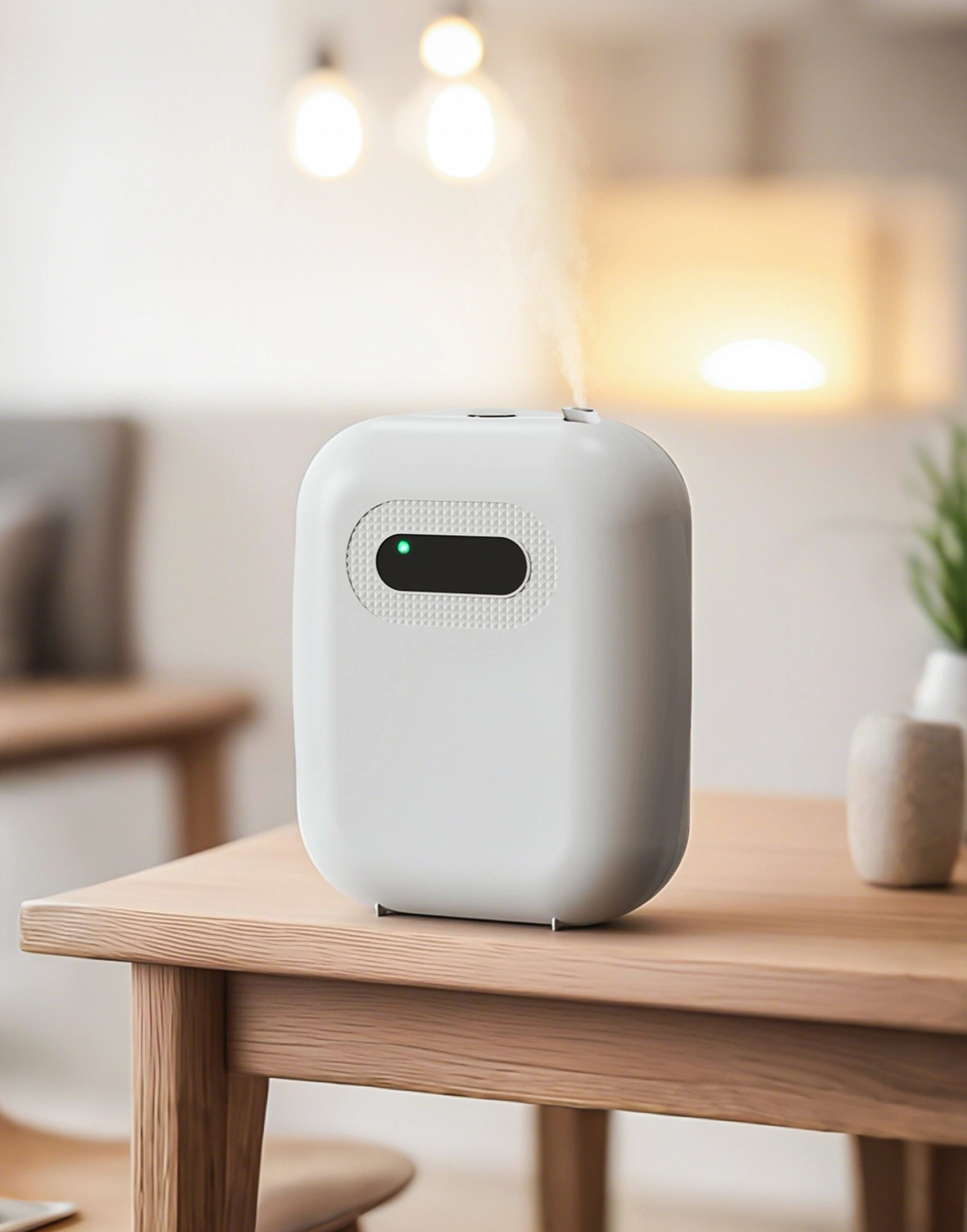
These small failures compound. A single empty diffuser in a flagship retail entryway can undercut the premium atmosphere the brand invested in building. Without data, operations teams manage by calendar instead of by actual need.
How IoT Sensors Make Scenting Response-Aware
Adding IoT connectivity to commercial scenting systems changes the logic from timed dispensing to response-driven diffusion. Modern diffusers with integrated or external sensors read presence and environment. A motion sensor in a conference room can trigger a 10-second fragrance burst after the room clears, preparing the space for the next group without wasting oil when the room sits empty. Humidity sensors adjust atomization rates so a dry winter lobby doesn’t dull the scent.
The hardware behind this is straightforward. A Bluetooth or WiFi module inside the diffuser communicates with a cloud platform. Scent-Share’s commercial range, for example, pairs occupancy input with oil-level monitoring. A diffuser covering 300 cubic meters in a boutique store can link to a wall sensor and change intensity profiles based on real-time customer count. This kind of response-driven logic is what separates a basic remote-operated machine from a system that actually reduces workload.
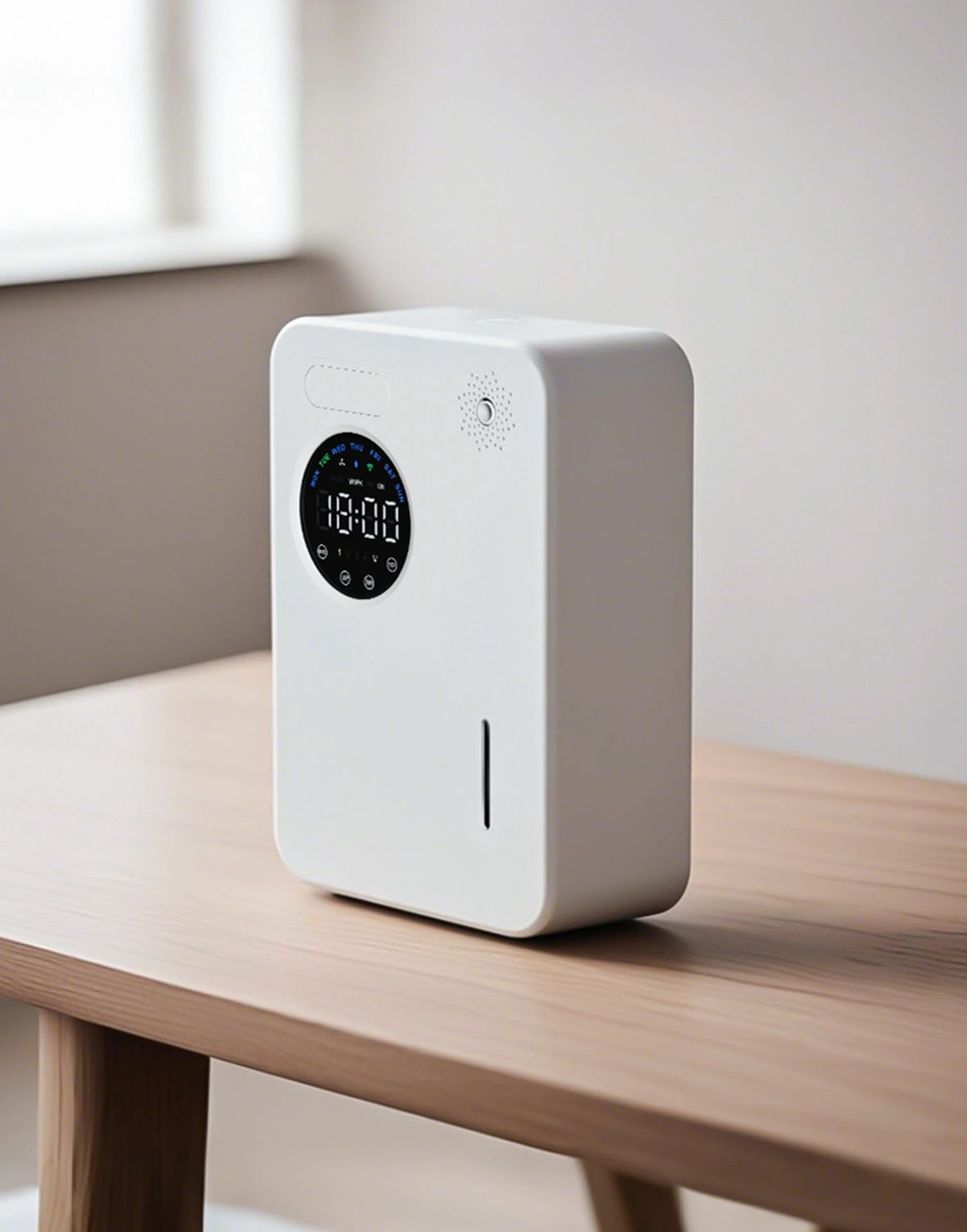 For facility managers, the immediate benefit is that scenting stops being a daily worry. Instead of staff tours, alerts arrive on a phone when any unit deviates from its target parameters.
Reducing Maintenance Downtime with Predictive Alerts
The next layer of IoT value sits in maintenance. Predictive alerts based on usage data turn refilling from a reactive scramble into a scheduled task. Instead of checking every unit, the system flags which bottles are below 15% and estimates days remaining. I’ve worked with hotel groups where switching to this model cut unscheduled maintenance calls by roughly 40 percent in the first year.
Here’s how the data flows in a connected building:
| Maintenance Task | Manual Approach | IoT-Connected Approach |
|---|---|---|
| Oil level check | Walk every floor weekly | Low-level alert sent to app |
| Device fault detection | Only during inspection | Real-time fault notification and diagnostic code |
| Refill ordering | Based on guesswork and stack | Predicted order date, automated reminders |
| Scent consistency audit | Guest or staff complaint triggers check | System logs diffusion logs for every unit |
A diffuser with a 150ml bottle covering a 300-square-meter space might last a month under normal conditions. But if footfall doubles during a promotion, consumption spikes. The IoT system logs that and adjusts the refill schedule. Facility teams don’t have to study spreadsheets; the app recommends when to reload.
For smaller installations, a wall-mount unit with dual power mode can run on batteries for months. But even there, knowing exactly when batteries will deplete avoids a silent failure during a key brand moment.
Integrating IoT Scenting with Existing Building Systems
Bringing IoT into scenting means integrating with what already runs. A standalone device using Bluetooth is simple, but large facilities often want scent diffusion tied to HVAC. This requires careful matching of voltage, communication protocols, and airflow interaction.
Before committing, it’s worth confirming a few points. Does the building management system support IoT add-on modules through a standard protocol (BACnet, Modbus), or will the diffuser operate on its own network? If the diffuser attomizes fragrance into an HVAC supply duct, the fan speed and cooling coils affect how the scent travels; a system designed for 3,000 cubic meters might need output compensation if the HVAC runs at variable speeds.
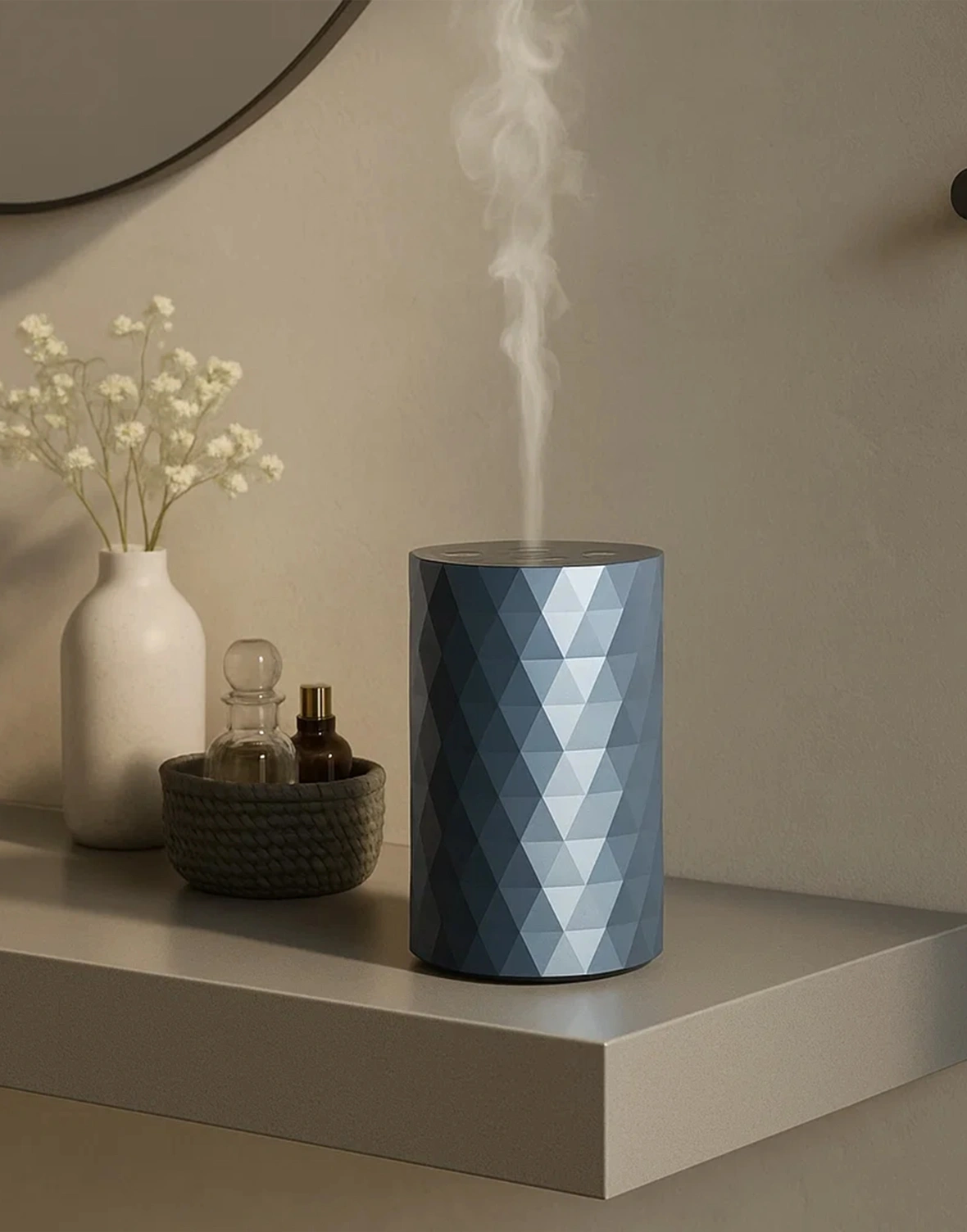
Scent-Share’s HVAC-compatible units cover up to 8,000 cubic meters and connect via Bluetooth to a dedicated app. They don’t require integration with the building’s core automation, which simplifies installation but still provides zone-level control and remote programming. For facility managers, this separation keeps the fragrance system self-contained, which reduces cybersecurity concerns and avoids opening the main BMS to additional vendors.
If your facility operates across multiple zones with different occupancy patterns, confirming sensor compatibility with your building management system early can prevent costly integration delays. Our team can review your layout at [email protected].
Managing Multi-Site Scenting Programs Remotely
The strongest case for IoT is a multi-location operation. Managing 50 diffusers in one hotel is complex; managing 500 across 20 sites demands a single dashboard. IoT platforms let a regional facilities director log into one interface and view every connected device, filter by status, and push scheduling updates to an entire brand portfolio.
A luxury retail chain I worked with used this approach to standardize scent intensity across all flagship stores. Before IoT, each store manager adjusted settings independently, and the scent experience varied from overwhelmingly strong to barely detectable. Once the entire network ran on a centralized app, the brand’s global fragrance standards became enforceable with a few screen taps.
The key data points: oil consumption per site, device runtime, and alert frequency. When a location’s usage spikes 30 percent above baseline, the system flags it for investigation. It may be a sensor fault or an unexpected traffic event, but either way the data drives a decision instead of a guess.
Device models differ in coverage and connectivity. Selecting the right one depends on space volume and integration depth:
| Device | Coverage | Best For |
|---|---|---|
| Commercial Scent Oil Diffuser (Bluetooth APP) | 300 m³ | Boutique retail, cafés, offices |
| Hotel Scent Oil Diffuser Tower | 3,000 m³ | Hotel lobbies, large retail floors |
| HVAC Scent Diffuser Aroma Dispenser System | 8,000 m³ | Airports, malls, casinos |
| Wall Mount Aroma Diffuser HVAC System | 3,000 m³ | Multi-floor buildings with ducted systems |
For facility managers, the move to IoT multi-site management eliminates the guesswork of whether the scenting program is truly consistent across every location. That kind of control is difficult to replicate with standalone units and manual schedules.
Common Questions About IoT Scenting Operations
Is IoT scenting ready for production use across multiple buildings?
Yes. In projects we’ve supported across 68 countries, the core hardware, communication modules, and cloud platforms are mature. The primary challenge is deployment planning, not device reliability. Select a diffuser that uses standard wireless protocols and confirm that the app supports bulk configuration changes. A well-planned rollout can have a 200-location network operational within weeks.
Does an IoT system require a dedicated IT team to manage?
No. Most platforms are designed for facility operations, not IT specialists. The app handles firmware updates, user permissions, and alert routing. A regional manager with basic device management experience can oversee daily operation. However, initial network setup benefits from a brief consultation to align device placement with Wi-Fi coverage.
How secure are IoT scenting devices against network breaches?
Good implementations use encrypted communication between the device and the cloud and do not expose the diffuser to the open internet. Since most scenting systems run on their own dedicated app rather than integrating directly with a building’s critical automation, the attack surface is limited. I recommend asking for a security summary before finalizing a supplier.
What happens if the internet goes down? Does the scent stop?
No. Onboard memory holds the last programmed schedule, so the diffuser continues running its current cycle even if the network drops. It will queue event data and upload it when connectivity resumes. The scent experience stays uninterrupted.
Will IoT scenting really lower my total cost of ownership?
In our experience, it does, but the savings come from labor reduction and extended device lifetime, not lower oil costs per liter. When maintenance calls shift from reactive to scheduled and alerts prevent dry-run pump damage, the operational cost per unit drops measurably. For a hotel group with 90 diffusers, I’ve seen a 25% reduction in annual maintenance hours within the first year. If your program currently relies on manual walkthroughs to verify function, those hours are the first savings. Share your current maintenance workflow with our team and we can estimate the reduction for your specific property count.
We know managing scenting across multiple properties is a demanding operational challenge. IoT-enabled systems with remote management and predictive maintenance turn that challenge into a consistent, data-driven program. To discuss your facility’s layout and find the right diffuser configuration, contact our team at [email protected] or call +86 185 6557 5758.
If you’re interested, check out these related articles: