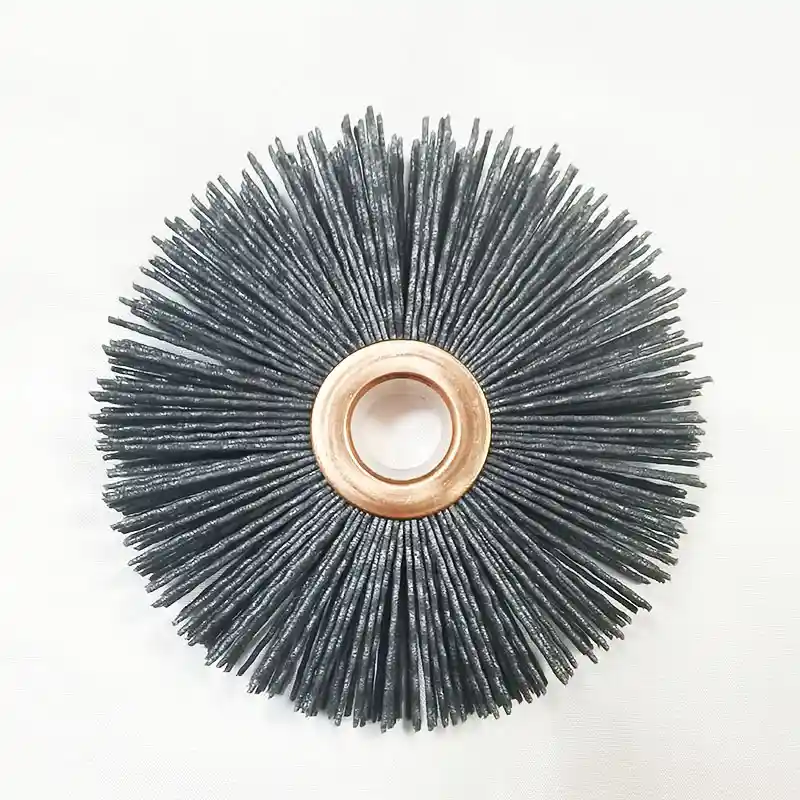

Crimped wire wheel brushes are among the most widely used rotary tools for removing light to medium surface rust and achieving a uniform matte polish on metal workpieces. Unlike the rigid cutting of a knotted brush, crimped wire filaments flex and fan out under rotation, giving a finer finish with less risk of gouging thin material. After fifteen years of specifying these brushes for job shops and production lines, our team at Huixi Brush has learned that consistent results depend less on the brush itself than on matching wire type, filament diameter, and operating speed to the workpiece. That matching process is what this article explains.
What Defines a Crimped Wire Wheel Brush
A crimped wire wheel brush consists of multiple wire filaments that are mechanically crimped and packed around a central metal hub. The hub has a standard arbor hole, typically 5/8 inch, 3/4 inch, or metric sizes, to mount on a bench grinder, angle grinder, or pedestal grinder. The crimping creates small waves in each filament, which makes the brush face more flexible than a straight wire or knotted design. As the wheel spins, the crimped wires strike the workpiece at varying angles, producing a uniform scratch pattern rather than deep gouges.
This flexibility also allows the brush to follow slight surface contours, which matters when cleaning castings or stamped parts with irregular geometry. Wheel diameters range from 3 inches to 12 inches, and the face width can be from 1/2 inch to 1 inch, depending on the hub design. We stock and customize crimped brushes in all common sizes, but selecting the right combination of wire and density is where most confusion arises.
Wire Type and Diameter Decide How Aggressively the Brush Works
The wire filament material sets the baseline for compatibility and cleaning speed. Carbon steel wire is the workhorse for general rust removal on mild steel and iron. Stainless steel wire is specified when cross-contamination from carbon steel could cause rust spots later, such as on stainless vessels or food grade equipment. Brass wire brushes are used where spark-free operation is required or when cleaning softer metals like aluminum without scratching.
Beyond the alloy, wire diameter (gauge) is the single most overlooked specification. Thin filaments around 0.3 mm (approximately 30 gauge) produce a fine satin finish but wear faster. Heavier wire at 0.5 mm removes rust and scale much faster, yet leaves a slightly rougher surface and generates more operator fatigue from vibration. In our production feedback, operators working on thin sheet metal consistently prefer 0.3 mm crimped wire, while heavy fabrication shops tend to order 0.5 mm because speed matters more than final finish quality.
Brush Density and Operating Speed Shape Cleaning Efficiency
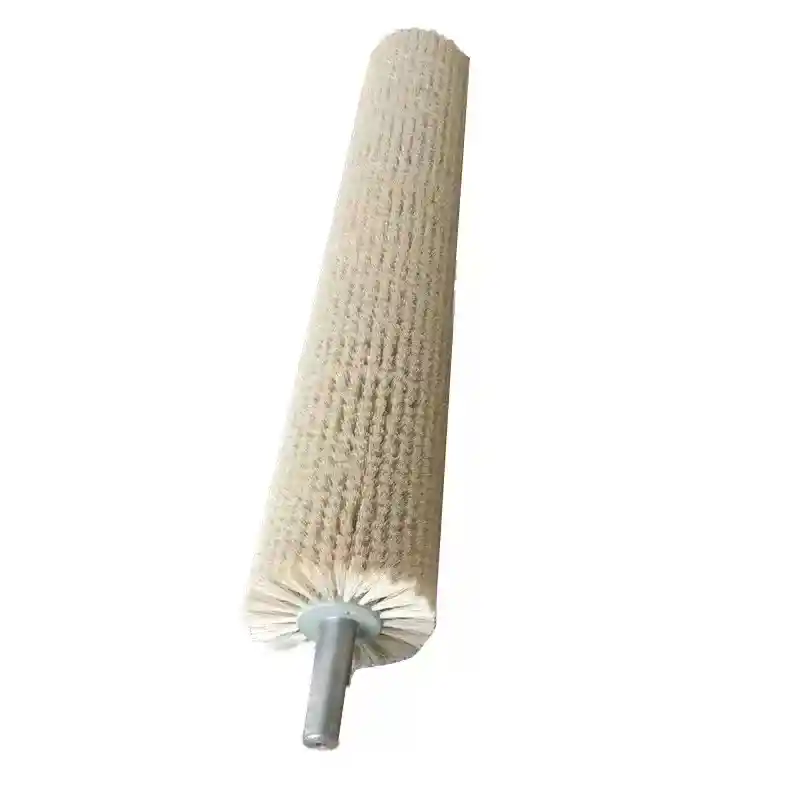
Fill density describes how tightly the wire filaments are packed into the wheel. Higher density means more cutting edges in contact with the workpiece simultaneously, which speeds up material removal. However, densely filled wheels trap heat, run rougher, and tend to throw wires sooner if the grinder speed is too high.
Operating speed is specified by the surface feet per minute (SFPM) at the brush face. For a 6-inch crimped wheel, the recommended RPM typically falls between 4500 and 6000, which corresponds to roughly 7000 to 9400 SFPM. Exceeding this range causes rapid wire breakage and a dangerous working condition. If your grinder has a fixed high RPM above 6000, stepping down to a smaller wheel diameter can bring the SFPM back within the safe band.
| Wire Diameter | Recommended Max RPM (6-inch) | Surface Finish | Typical Application |
|---|---|---|---|
| 0.3 mm | 5000 | Fine satin | Paint prep, aluminum finishing |
| 0.4 mm | 5500 | Uniform matte | General rust removal, mild steel |
| 0.5 mm | 6000 | Slight texture | Heavy rust, scale removal |
If your program involves workpieces of different hardness levels within the same production cell, it is worth confirming with a brush engineer that the selected wire type and diameter can handle the range without excessive breakage. Reach out at [email protected] with your part materials and we will recommend a configuration.
Matching the Brush to Metal Hardness and Surface Condition
Workpiece hardness directly affects brush life. On low carbon steel (below 150 HB), nearly any carbon steel crimped wire brush will last through thousands of parts. Hardened steels above 300 HB, however, will wear the wire tips much faster and may require stainless steel wire for its higher tensile strength. The mistake we see repeatedly is using a plain carbon steel brush on hardened tool steel: the brush sheds wire within minutes and the operator blames the brush quality rather than the mismatch.
Surface condition before brushing matters equally. A heavily rusted plate with deep pits needs a two-step approach: a knotted wheel brush first to knock down the thick scale, followed by a crimped wheel to refine the finish. Going straight to a crimped brush on thick rust will clog the brush face and slow work to a crawl. We work with a European distributor whose end users in ship repair have standardized on this two-step method and report double the brush life compared to using crimped alone.
When Crimped Outperforms Knotted: A Practical Comparison
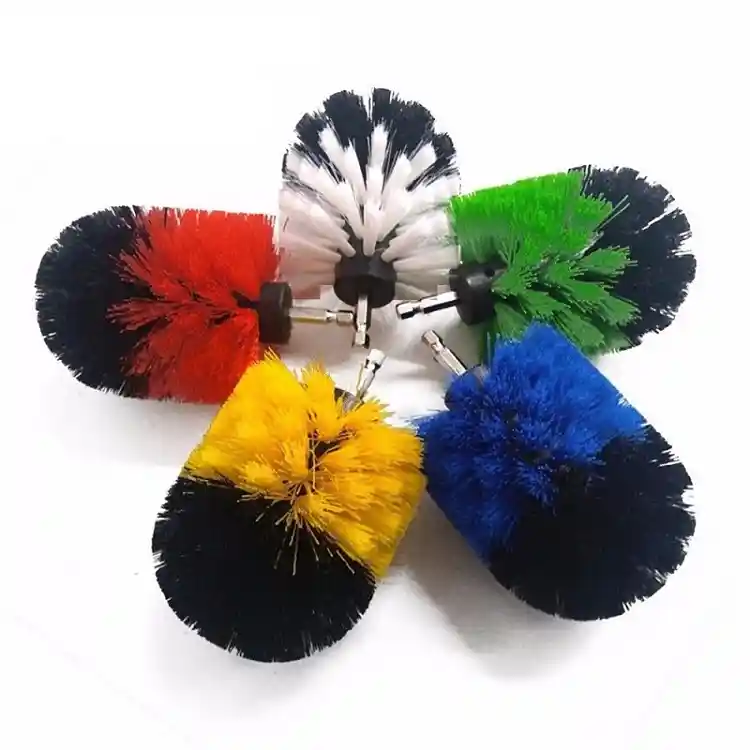
Crimped and knotted wire wheel brushes are not competitors; they handle different work stages. The knotted design twists wire filaments into tight cables, giving it a rigid, aggressive cut. It strips heavy weld slag, mill scale, and deep rust quickly, but leaves a rough, directional surface that often requires secondary finishing. A crimped brush, by contrast, is the finishing tool.
Using a crimped wheel on thin-gauge sheet metal or precision fabrications where gouging would scrap the part is the correct choice. The flexibility of the crimped wires acts as a built-in load limiter: you can press the workpiece against the wheel and the wires deflect rather than dig in. This makes crimped brushes the safer option for operators who are not full-time grinding specialists.
| Feature | Crimped Wire Wheel Brush | Knotted Wire Wheel Brush |
|---|---|---|
| Aggressiveness | Moderate | High |
| Surface Finish | Fine matte to satin | Rough, directional |
| Flexibility | High | Low |
| Wire Breakage | Fine wires break gently | Cables break in chunks |
| Best For | Finishing, light rust, paint prep | Heavy scale, weld removal, deep rust |
Customizing Crimped Wheel Brushes for Production Lines
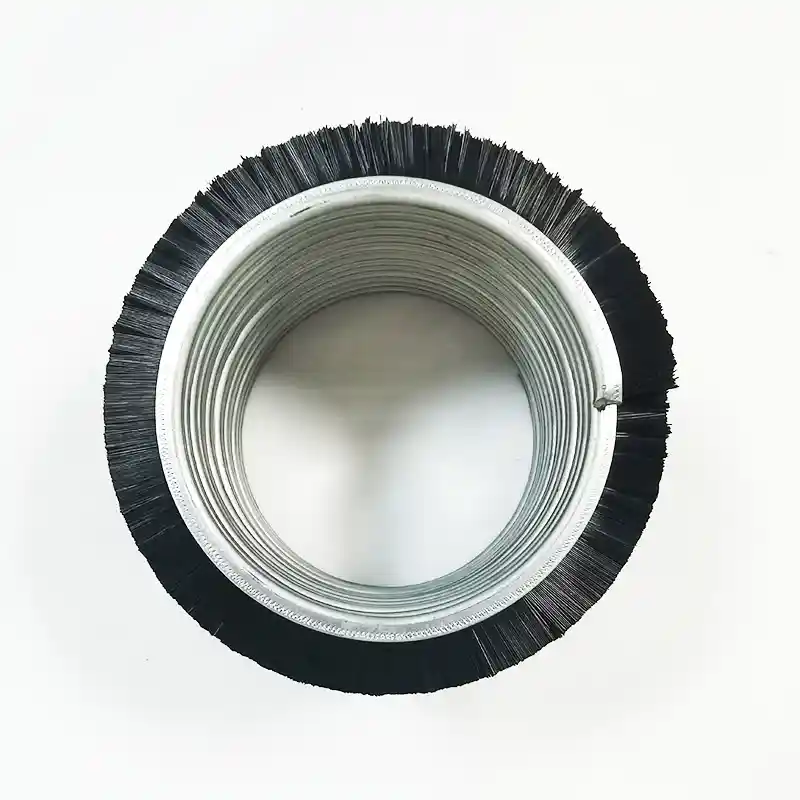
Production environments rarely fit off-the-shelf solutions perfectly. Arbor hole size may need to match a specific European or Asian spindle. Wheel diameter might require a 10 mm or 14 mm hole instead of the standard imperial sizes. Wire trim length can be adjusted for reach into recessed areas. We have also supplied brushes with mixed wire gauges in the same wheel, where the center row is heavier wire for initial cut and the outer rows are finer wire for finishing — a design that effectively combines two steps into one.
Huixi Brush specializes in OEM and ODM crimped wire wheel brush orders from 200 pieces upward. Our Anhui factory holds 16 years of production experience, and we ship to Europe, North America, Australia, and Southeast Asia. Low MOQ and free samples allow buyers to test performance before committing. Email your drawing or requirements to [email protected], and we will return a quotation and technical recommendation usually within 24 hours.
Production Questions About Crimped Wire Wheel Brushes
Can crimped wire wheel brushes remove heavy rust?
For thick, flaking rust or mill scale, a crimped brush will struggle. It can remove light to medium surface rust effectively, but deep corrosion needs a knotted wheel first. If you are working on heavily rusted structural steel, do the heavy removal with a knotted brush, then switch to a crimped brush for the final finish. The two brushes together will outlast any attempt to do the job with a single brush type.
What RPM gives the best results on a bench grinder?
For a 6-inch crimped wire wheel, the sweet range is 4500 to 6000 RPM. Running faster than 6000 causes rapid wire fatigue and shortens brush life significantly. If your grinder is fixed at 3600 RPM, that is also acceptable, but material removal will be slower. Always wear a face shield regardless of speed, because crimped wires do break off and eject as fine needles.
How does wire diameter affect the final metal surface?
From our own testing and customer feedback, 0.3 mm wire leaves a smooth satin finish suitable for paint adhesion or decorative polish. The 0.4 mm wire is the most popular choice because it balances speed and finish for general metal preparation. The 0.5 mm wire removes rust faster but will leave fine scratches visible under light. For visible automotive or architectural parts, we recommend 0.3 mm or 0.4 mm at moderate pressure.
Are stainless steel wire brushes always necessary for stainless steel parts?
Only if post-brush corrosion is a concern. Carbon steel wire leaves microscopic iron particles embedded in the stainless surface, which can develop into rust spots over time, especially in damp environments. If the parts will be painted or coated afterward, carbon steel wire is acceptable. For food, medical, or marine stainless applications, use a stainless steel wire brush to avoid contamination. We stock both types in multiple diameters.
Can I get a custom diameter with a non-standard arbor hole?
Many buyers assume only standard inch sizes are available, but Huixi Brush manufactures crimped wire wheel brushes with arbor holes from 10 mm to 25 mm and wheel diameters from 75 mm to 300 mm. If your equipment has a unique spindle size, share the dimensions and thread pitch with us. Our engineering team will confirm whether a direct fit or adapter solution makes more sense, and we can ship samples for trial. Send your spindle dimensions and desired wheel diameter to [email protected] or call +86 1580 0932 713.
If you’re interested, check out these related articles:
abrasive wheel brush a magical tool for industrial surface treatment
brass brushes work perfectly for pipe cleaning