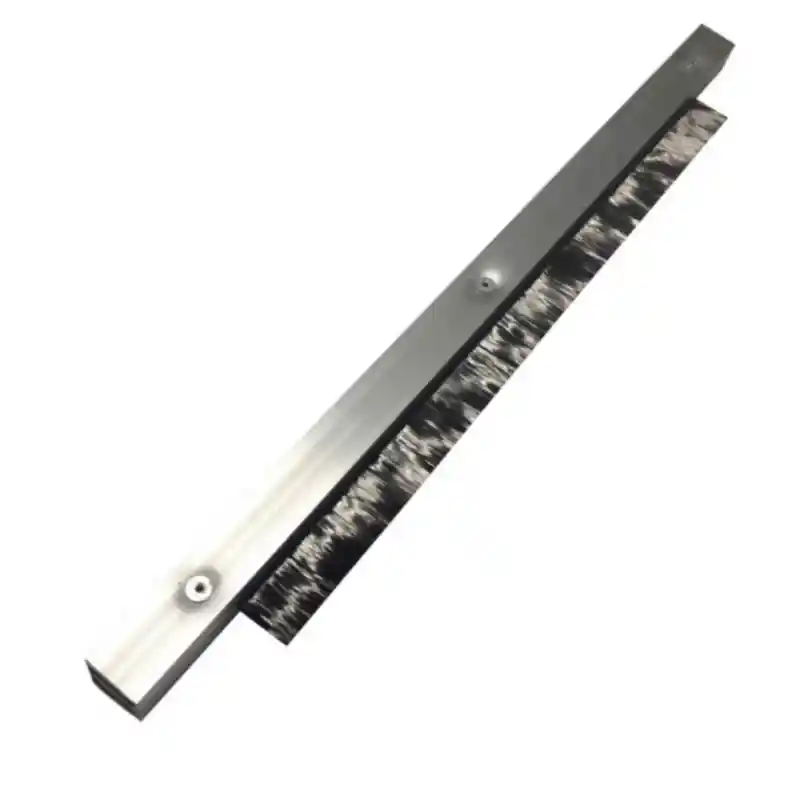

When dust ingress through enclosure gaps compromises equipment reliability, a flexible strip brush is often the most direct and cost-effective sealing solution. But not every strip brush delivers the same sealing performance. The difference comes down to bristle elasticity, backing profile, and how well those elements match your specific gap and environmental conditions. As an industrial brush engineer with over fifteen years of experience, I have seen how the right material choice and holder design can turn a standard brush into a reliable multi-scene dust barrier, while a mismatched selection leads to early failure and maintenance headaches. This article walks through the key factors procurement engineers and maintenance teams should evaluate when selecting a flexible strip brush for dust sealing.
How Flexible Strip Brushes Create a Dust Seal
A strip brush seals by filling the gap between two surfaces with a dense row of bristles. The bristles flex under light compression, maintaining contact even if the surfaces are not perfectly aligned. A rigid backing strip, usually aluminum, galvanized steel, or stainless steel, holds the bristles in place and slides into a mounting channel.
The mechanism is simple, but the performance depends on three things: bristle length must exceed the maximum gap by enough to maintain pressure, bristle density must be sufficient to block the target particle size, and the backing must remain straight under thermal cycling or mechanical load. When all three are dialed in, the brush can block dust, light spray, drafts, and even light without generating friction that wears seals or adds motor load.
Choosing Bristle Material and Backing Profile for Your Environment
Getting the right combination of bristle material and backing metal is where most sealing failures start. I cannot count how many times a customer has shown up with a brush that looked fine on the drawing but failed after a few weeks because someone matched a nylon bristle to a high-temperature housing or used aluminum backing outdoors.
The table below gives a starting point for common pairings.
| Bristle Material | Best For | Approximate Temperature Limit | Typical Backing Pairing |
|---|---|---|---|
| Nylon 6/6 | Abrasion-resistant dust sealing, general mechanical enclosures | 80°C continuous | Galvanized steel or aluminum |
| Polypropylene | Chemical-plant doors, washdown areas | 60°C, good chemical resistance | Stainless steel or galvanized steel |
| Stainless steel wire | High-temperature sealing, furnace edge seals | 400°C | Stainless steel only, matching grade |
For outdoor machinery exposed to wide temperature swings, galvanized steel is more stable dimensionally than aluminum. Aluminum can expand and bow when the sun hits it, opening gaps at the ends. Stainless steel rarely warps, but it costs more and adds weight that some lightweight door designs cannot carry. I have seen maintenance teams replace aluminum-backed brushes every nine months on loading dock doors, only to solve the problem once they switched to galvanized steel with the same bristle type.
Bristle elasticity also matters. A brush with short, stiff bristles may not conform to uneven or warped surfaces, leaving streaks of daylight that let fine dust through. For irregular gaps, longer bristles with moderate flexibility are worth the extra material because they seal even when the metalwork is less than perfect. The extra cost in bristle length is almost always cheaper than the scrap or rework caused by uncontrolled dust.
In a project last year, a food-processing line had a 6 mm gap along a sliding guard door that varied by almost 2 mm across its width. The standard nylon strip brush the client first ordered (bristle length 8 mm) sealed the tight side but left a visible slit on the wide side. We shipped a custom brush with 12 mm nylon bristles and a galvanized steel backing; the longer bristles compensated for the variation without adding significant drag. That line has been running 18 months with no dust complaints.
If your application involves extreme temperatures or chemical exposure, it is worth confirming bristle compatibility before finalizing your BOM. Talking through the exact conditions often reveals a material detail that generic catalogs miss. I can be reached at [email protected] or +86 1580 0932 713 when you need that confirmation.
Does Bristle Elasticity Matter for Irregular Gaps?
Yes, it matters. High-elasticity bristles bend under contact pressure and fill the gap profile instead of bridging it. For uneven or worn machinery, choosing a flexible bristle with a length at least 30% greater than the maximum gap gives the brush room to deform without losing contact. Bristle density is the other half of the equation: too sparse, and dust slips through between bristles; too dense, and the brush becomes stiff and generates unwanted friction that the door or slide motor must fight.
Multi-Scene Applications Where These Brushes Excel
Flexible strip brushes show up in more places than most buyers realize. On automated production lines, they seal the edges of sliding guards to keep lubricant mist and metallic dust away from sensors and control panels. In cleanroom pass-through chambers, nylon strip brushes on all four edges stop particle exchange between zones without requiring complex interlock doors. They also work as dust curtains at conveyor openings, as door-bottom seals on cold storage rooms, and as wiper brushes that strip debris from moving parts before they enter a sensitive process.
Every scene imposes a different combination of abrasion, chemical exposure, and movement speed. A brush for a daily-cycle maintenance door in a warehouse lives a completely different life from a brush sealing a robot cell door that opens 200 times a day. I always ask clients to describe not just the gap size but the duty cycle, the surrounding temperature, and whether any cleaning chemicals or washdowns are involved. Without those details, a brush that seals perfectly on day one can degrade within three months.
Custom Brush Design and Supplier Coordination
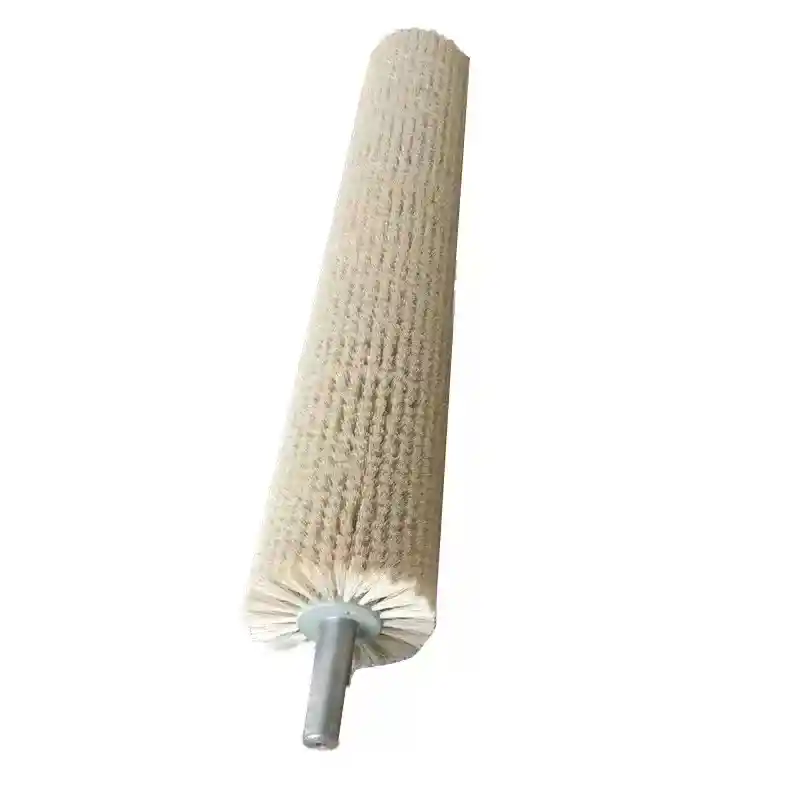
When an off-the-shelf brush does not match the channel dimensions or sealing requirements, custom design becomes the most practical path. As a brush engineer, I start with the gap cross-section, the mounting slot, and the environmental conditions, then work backwards to select bristle type, length, density, and backing profile. That might mean a double-row brush for wide gaps, a chamfered top edge for a tight enclosure, or a polypropylene bristle for a food-grade washdown area.
Huixi Brush specializes in exactly this kind of customization. We produce strip brushes with nylon, polypropylene, abrasive nylon, brass, and stainless steel wire, and we cut backing strips to length in aluminum, galvanized steel, or stainless steel. Because we manufacture in Anhui Province with 16 years of experience and ship from Shanghai, we control quality from wire to finished brush and can supply small trial quantities for validation.
For a European automation integrator, we recently supplied a dust-sealing strip brush with a galvanized steel holder and a specific chamfer so the brush would seat into an existing recess without tooling changes. The client sent us a drawing; we shipped a pre-production sample within 10 days, and the full order followed after the sample passed their cycle test. That kind of open communication is how we work, and it eliminates the back-and-forth that delays projects.
If you have a specific gap dimension and environment requirement, send your part number and quantity to [email protected]. We will confirm a custom sealing solution and provide a quotation, usually within one business day. You can also call +86 1580 0932 713 for direct technical support from our engineering team.
Installation Guidelines for Long-Term Sealing Performance
Proper installation is as important as material selection. Strip brushes typically slide into a C-channel or U-channel holder that must be straight and securely fastened. I recommend using screws, not adhesive alone, spaced every 200–300 mm along the channel. Adhesive holds at first but can creep or fail under thermal expansion.
The brush should be inserted with the bristles angled slightly toward the moving surface, not dead vertical. A 5- to 10-degree tilt improves conformance to uneven gaps and reduces chatter. After installation, run a full cycle test and check for even contact by backing it with a light source or feeler gauge. Any visible gap more than 0.5 mm wide likely means uneven holder alignment or insufficient bristle length.
For maintenance, compressed air or a vacuum once per shift keeps accumulated dust from packing into the bristle root and stiffening the brush. If you see bristles becoming permanently bent or the backing starting to bow, address the underlying cause; a deformed brush no longer seals and will tear over time.
Common Questions About Flexible Strip Brushes for Dust Sealing
How long do strip brushes last?
Lifespan depends heavily on the application. A nylon brush sealing a slow-moving, dry machinery door can last several years. The same brush on a high-cycle door in a dusty foundry may need replacement every eight to twelve months. The first sign of wear is usually permanent bristle deflection or backing deformation. If you notice dust leaking where it did not before, the brush has likely lost its ability to spring back into full contact. I recommend scheduling a visual check every three months in high-cycle jobs.
What bristle density is best for fine dust?
For fine powder or airborne dust, denser bristle packs block more pathways. A bristle density of 15 to 20 rows per inch is typical for general dust sealing, but for fine particles under 10 microns, I move to higher-density configurations and sometimes a double-row brush. The trade-off is friction: denser brushes push harder against the sealing surface. It is important to test the compromise between seal quality and the extra load on the opening mechanism.
Can you produce non-standard backing dimensions?
Yes, that is our standard way of working. Whether the mounting slot is narrower than a standard extrusion, deeper, or has an unusual profile, we can fabricate a backing strip to fit. Customers often send us a cross-section drawing or a short section of their existing profile, and we design the brush around it. There is usually no tooling charge for these adjustments because we cut and form the backing in-house.
What is your typical lead time for a custom strip brush?
For standard bristle and backing combinations with custom dimensions, we typically ship samples within 7 to 10 days and production quantities within two to three weeks. If the backing requires a special alloy that is not in regular stock, lead time may extend slightly. We always confirm feasibility and schedule when we quote, and I follow up personally on every order until it clears inspection. To get a sample moving, share your requirements and we will confirm the shipping date and arrange a sample shipment with no upfront charge.
If you’re interested, check out these related articles:
rope cleaning brush for industrial use a key tool for maintaining safe production
the differences between knotted wire wheel brush and crimped wire wheel brush
where stainless wire spiral brush can be used